 Horror News | HNN Official Site | Horror Movies,Trailers, Reviews
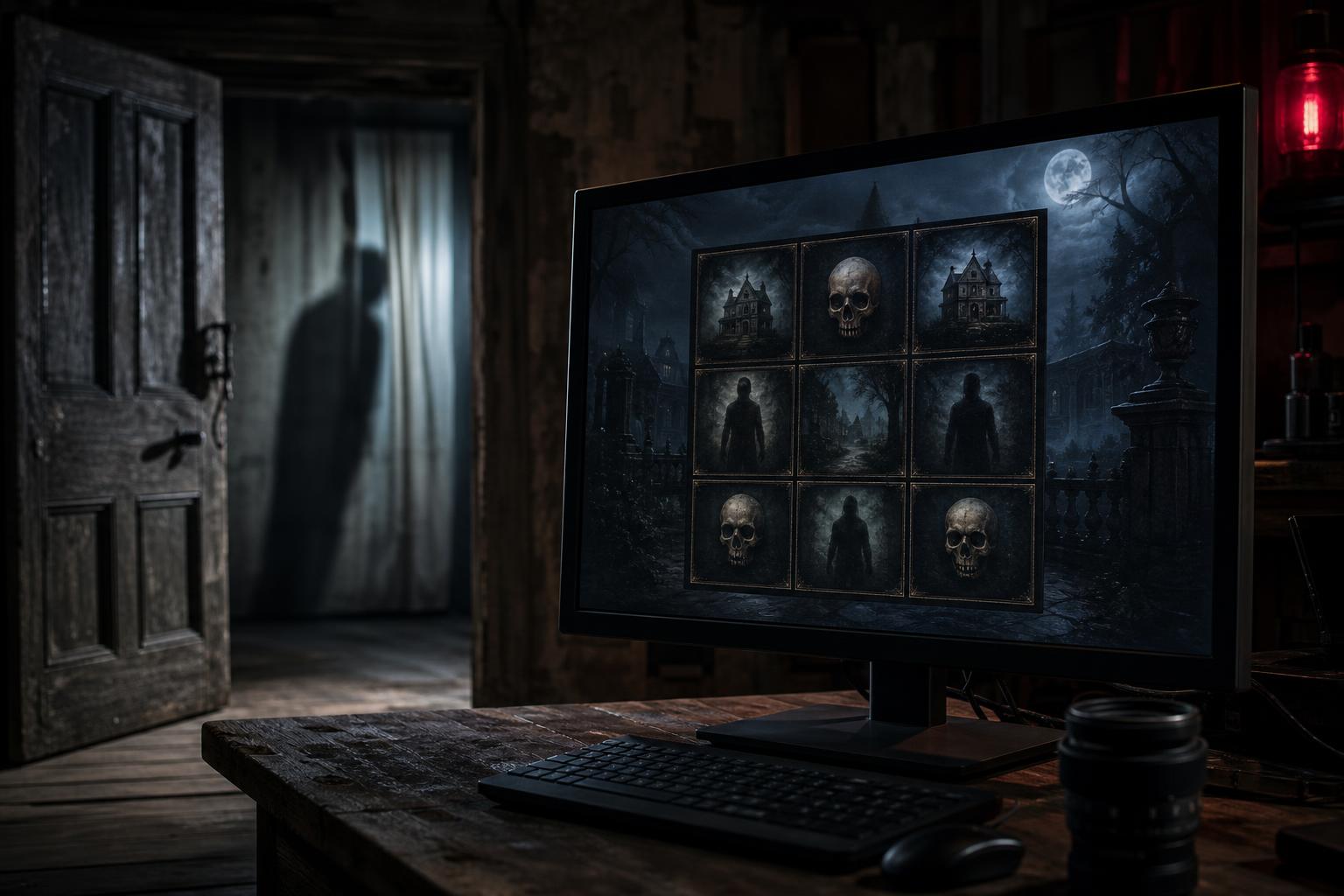
Michael Myers appears at a window. Elsewhere, he lurks behind a clothesline. In a licensed slot adaptation of John Carpenter’s Halloween, released in 2017, the killer occupies the scenery around the reels, giving anyone familiar with the film a reason to watch the edges of the screen.
That placement shows how horror filmmaking can shape game design. A threatening house establishes the setting, a recognizable figure supplies the danger. As the game progresses, those images take on practical jobs, identifying symbols and marking events within the rules.
A Setting That Does Some Storytelling
Whether the screen belongs to a horror film, a slot or a remote arcade app such as CashClawee, it offers the same starting point: what do the surroundings tell us before anything happens?
Horror filmmakers have spent more than a century answering that question. In Robert Wiene’s The Cabinet of Dr. Caligari, released in 1920, distorted perspectives and exaggerated forms make the buildings themselves unsettling. The architecture helps tell the story.
A game has less room to establish its world, so familiar settings carry considerable weight. One vampire-themed slot uses a dark Transylvanian castle. The Halloween adaptation arranges its reels within the derelict Myers house. Each location gives the images inside it a context, drawing on associations that horror audiences bring with them.
Giving the Monster a Job
Characters need to stand out within those settings. Count Orlok in F. W. Murnau’s Nosferatu, released in 1922, remains a useful example of recognition through shape: pointed ears, a hunched back, hollowed eyes, and prominent teeth give him a distinctive appearance.
On a reel grid, a character’s image can also explain something about play. A haunted-house slot released in 2018 uses a supernatural guardian as its wild symbol, which substitutes for other symbols according to the rules. The house marks a free-spins trigger, and a skull identifies a bonus.
These pictures acquire meaning through their behavior. When a qualifying wild fills a highlighted reel, the guardian’s image becomes an action that changes the playing area.
Where the Eye Goes
Color and placement help organize these characters and objects. In a werewolf-themed release announced in October 2019, a blood-red full moon illuminates a ravaged 18th-century village. Nurses, clairvoyants, gravediggers, and soldiers appear on the reels. The game places the player in the werewolf’s perspective, giving its human figures a place in the story.
A slasher-themed release announced in August 2024 takes the survivor’s position instead. Its premise follows a massacre involving five teenagers, and its developer explicitly describes the artwork as drawing on 1980s slashers.
The way danger enters the picture matters, too. A Library of Congress essay discusses how Halloween’s widescreen compositions allow unexpected figures to enter the frame. Michael’s appearances around the adaptation’s reels offer a smaller-scale use of that arrangement: the threat waits beyond the main area of attention.
A Horror Scene in a Few Steps
From there, the artwork can support a sequence of events. The Halloween adaptation includes a selection bonus inside the Myers house. Finding Michael ends the feature unless a protective item intervenes. The house becomes the setting for an encounter, with the bonus rules determining how it unfolds.
The 2024 slasher example frames its free-spins feature around revenge. Special symbols remain in position as the sequence continues. A science-fiction horror adaptation unveiled in 2014 divides its presentation into three stages: searching, encountering, and entering a hive. It was also its developer’s first casino game with real-time 3D graphics.
Searching and confrontation give these features familiar story shapes. Sound helps connect them with the films they reference. The Halloween adaptation, for example, incorporates the original film’s soundtrack and sound clips alongside its visual details.
Keeping the Screen Clear
With so much happening, the artwork must leave room for information. Players need to recognize symbols, understand what starts a feature, and read the result of a wager. A skull’s meaning within the rules needs to be as clear as its horror associations.
US internet gaming rules can incorporate technical standards covering clear game information, identifiable special symbols, and accurate outcome displays. Readability belongs alongside character design, lighting, and animation in any discussion of the finished screen.
The financial stakes also warrant attention. Real-money gambling carries a risk of losing money. Adults who choose to participate should set spending and time limits and avoid chasing losses.
Return to Michael at the window. His placement gives the background a dramatic purpose while leaving the reels available for the game’s instructions and results. The same screen has to accommodate both jobs: somewhere for a horror figure to lurk, and somewhere for the player to understand what happened.