 Horror News | HNN Official Site | Horror Movies,Trailers, Reviews
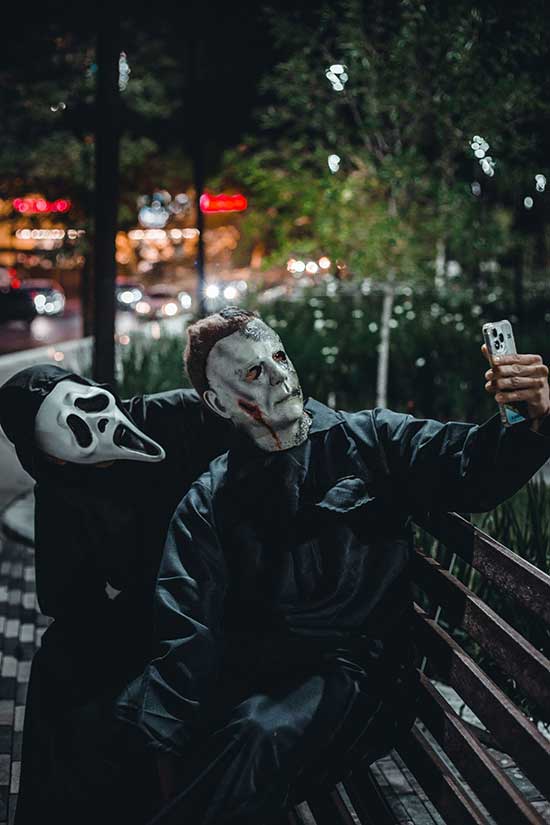
Horror cinema has spent more than a century learning how to make audiences anticipate what they cannot see. Online casino games borrow that craft, compressing dread, surprise and release into sequences measured in seconds.
You know the corridor is empty because the camera has shown every inch of it. Still, the darkness at the far end feels occupied. Reveal the creature immediately and the image may remain grotesque, but the suspense has gone. Horror lives in the interval between recognizing danger and discovering what it intends to do.
That interval also suits a game built around concealed outcomes. Reels turn, symbols remain just out of position and a soundtrack hints that the ordinary sequence may be changing. The machinery belongs to casino gaming, but the emotional grammar comes from the movies.
The Scare Begins Before the Reveal
Given two hours, a film can withhold its monster until the audience is desperate to see it. An online game receives no such luxury. Its artwork must establish a setting immediately, then give each round a miniature beginning and payoff. Casino games therefore test how efficiently horror communicates.
Look through the selection at spinbit australia and distinct strains of horror emerge. Slayers Inc announces a futuristic world, whereas Harvest Moon: Grave Profits turns farm imagery into a radioactive nightmare. Dead Mans Bounty: Hold & Win uses supernatural-western language. Before anyone examines the rules, each title has promised a tone.
Placed beside candy-colored fantasy, darker premises reveal horror’s efficiency. A skull or sickly green light can communicate menace instantly.
The best examples reveal enough to make the menace legible, then leave the next question unanswered. Curiosity does more work than gore.
A Whole Movie Through Its Symbols
No other genre arrives with the same visual vocabulary. Mist already hides something, an abandoned building has a history and an innocent object can acquire terrible significance. Game artists can use that knowledge without explaining why the cemetery gate is open.
As in cinematic production design, the lettering and background texture must agree. Even a static screen can imply events beyond its edges.
| Horror world | What establishes it quickly | The difficult design question |
| Gothic haunting | Age, decay and evidence of former lives | Can the setting feel inhabited without showing its ghost? |
| Supernatural western | An exposed frontier disturbed by the returning dead | Does the menace belong to the landscape rather than decorate it? |
| Mutated rural horror | Familiar harvest imagery corrupted by contamination | Is the ordinary world still visible beneath the mutation? |
| Dystopian pursuit | Hostile streets and figures built for combat | Can speed create danger without erasing atmosphere? |
Across one round, the atmosphere has four different jobs:
- The invitation. The loading screen establishes the location and suggests what kind of danger belongs there.
- The ordinary round. A calm baseline teaches the game’s normal behavior, giving later disruption something to violate.
- The intrusion. One altered symbol, sound or movement breaks the established pattern.
- The aftermath. A brief release allows the preceding event to register before the original state returns.
That breadth becomes visible in SpinBit’s present library, where futuristic pursuit and mutated rural imagery ask very different things of the artist. Horror can infect science fiction without surrendering its identity.
Sound Has to Anticipate the Unknown
Turn away during a frightening scene and much of its power remains. A low drone removes comfort from an empty room. An irregular footstep suggests distance. Silence can be more alarming because it makes the next sound feel inevitable.
Game audio faces a complication that cinema avoids: the composer does not control every sequence’s duration. Discussing his score for Faces of Death, composer Gavin Brivik described the freedom of writing away from a fixed picture and experimenting with unconventional sounds in video games. The music needs to intensify or retreat on demand.
This is where restraint becomes valuable. If every spin screams, nothing feels exceptional. A quiet baseline gives the scrape, pulse or sudden chord somewhere to go. The listener notices the change before consciously identifying it.
A further complication appears when the same title moves from headphones to a phone speaker, as the browser-based games available through SpinBit are designed to do. Intricate bass may disappear. A clean motif or well-timed absence survives.
Fear and Disgust Are Not Interchangeable
Making a horror game louder and uglier is easy. Far harder is distinguishing between a presence that creates anticipation and an image that provokes rejection.
A 2024 study from the journal Scientific Reports, part of Nature Portfolio, had 558 adults rate ten clips from killer, psychological, body and gore, supernatural and monster horror. Fearfulness, perceived realism and morbid curiosity positively predicted both excitement and enjoyment.
The two models accounted for 45.6 and 41.6 percent of the variance respectively. That explanatory power gives the finding weight: the researchers were measuring two different experiences rather than forcing both into a catch-all definition.
The result argues for control. A monster needs enough credibility to command attention, but anatomical detail is not a substitute for suspense. The next development should invite curiosity rather than leave the last image repellent.
That distinction is reflected in the theme and provider filters used within SpinBit’s slots library. Alien mutation does not promise the same sensation as occult imagery. File both beneath one generic “dark” label and each loses some of its identity.
Familiar Monsters Still Need New Ideas
A vampire needs no introduction. The coffin becomes suspicious before its lid moves; the fangs merely confirm what the audience already sensed. That instant recognition is valuable, but familiarity eventually becomes a weakness. Once every coffin opens on cue, the mechanism attracts more attention than whatever might emerge.
A new context can rescue an old creature. Place the undead in a western and graveyard imagery meets an exposed frontier. Move a monster into a cheerful workplace and routine behavior becomes suspicious.
Pacing decides whether that disturbance lands. Writing about the diner sequence in Mulholland Drive, BBC critic Nicholas Barber observed that “it’s the dread that builds beforehand that really chills the blood” in a selection of terrifying film moments. The eventual glimpse lasts seconds. Lynch makes the walk toward it feel intolerably long.
A casino round cannot reproduce that five-minute scene, but it can preserve the principle. An animation may hesitate. Music can narrow to one repeated note. The screen may draw attention toward an apparently empty space. The payoff gains force from the wait imposed before it.
What Survives on the Smaller Screen
On a cinema screen, something can move almost unnoticed at the edge of a forest. Shrink the same composition onto a phone and the trees become a dark knot. The artist has to decide what survives: the pale hand against the bark, the gate left open or the figure that was not there a moment ago.
Horror has always understood that limitation can be useful. Darkness removes information. Silence leaves you listening harder. A small screen can achieve the same effect when it offers one precise detail and refuses to explain the rest.
Gambling is intended for adults aged 18 and over and should always be treated as entertainment, never as a way to make money. Only gamble what you can afford to lose.