 Horror News | HNN Official Site | Horror Movies,Trailers, Reviews
(https://www.imdb.com/title/tt0434706/mediaviewer/rm3065038336/)
The definitive rankings of top-rated dark animated series highlight masterpieces like Monster, The Promised Neverland, and Parasyte that excel in suspense and visceral thrills. However, with hundreds of shows available, finding a truly frightening series that is worth your limited free time can feel overwhelming. Understanding verifiable metrics eliminates the guesswork, helping you pick a show that actually delivers genuine horror.
Many fans struggle to balance a busy academic workload with their desire to binge-watch a new series. If you ever feel tempted to use a writing service and pay someone to write an essay just to free up your weekend for a marathon, you are not alone. Choosing a tightly paced, highly rated show ensures you maximize your downtime without wasting hours on disappointing filler episodes.
By analyzing user data from the largest tracking databases in 2026, we can objectively rank these terrifying shows. This mathematical approach removes personal bias and highlights what global audiences truly consider a masterpiece. The table below previews the eight most critically acclaimed titles that dominate the rankings in strict mathematical order.
Key metrics and scores for the top eight series
| Rank | Series title | MyAnimeList score | Primary subgenre | Episode count |
| 1 | Monster | 8.89 | Psychological | 74 |
| 2 | The Promised Neverland | 8.52 | Suspense | 12 |
| 3 | Mononoke | 8.43 | Supernatural | 12 |
| 4 | Hellsing Ultimate | 8.36 | Action | 10 |
| 5 | Parasyte: The Maxim | 8.35 | Sci-Fi | 24 |
| 6 | Shinsekai Yori | 8.30 | Dystopian | 25 |
| 7 | Devilman Crybaby | 7.77 | Supernatural | 10 |
| 8 | Shiki | 7.74 | Vampire | 22 |
Source note: Scores are based on aggregated 2026 data from MyAnimeList user ratings.
1. Monster: a masterclass in suspense and human evil
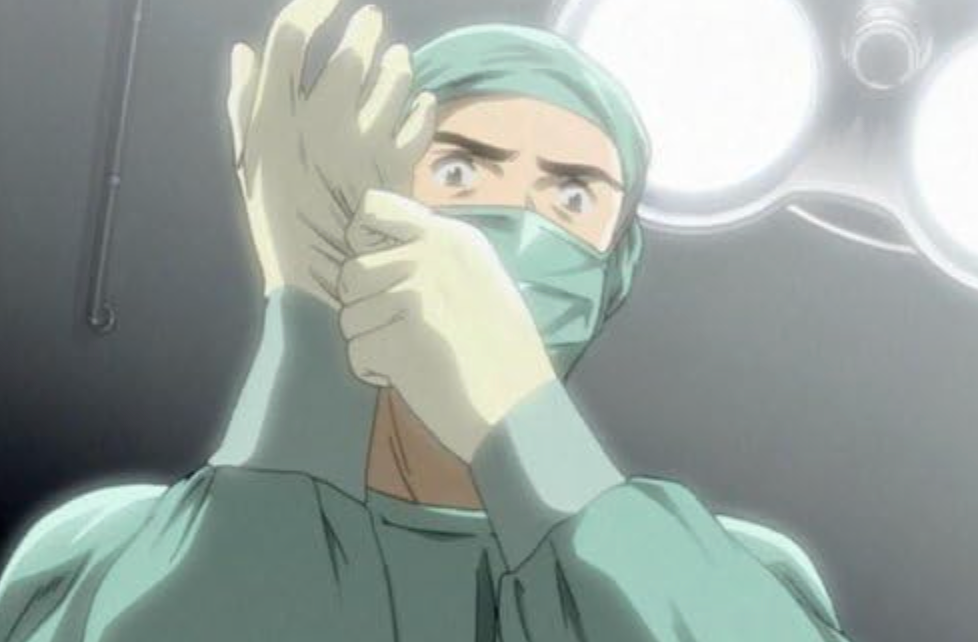
Monster proves that real human beings are far more terrifying than any supernatural creature, earning the #1 spot with a 8.89 rating through pure psychological dread. This seventy-four-episode masterpiece follows Dr. Kenzo Tenma, a brilliant surgeon whose life collapses after he saves a young boy named Johan. Johan grows up to become a calculating serial killer, forcing Tenma to hunt him down to correct his medical choice.
This series perfectly defines the best horror anime by focusing purely on realistic, grounded tension. There are no ghosts, demons, or magic spells in this European setting. Instead, the narrative relies on slow-building anxiety, moral ambiguity, and deeply flawed characters.
The pacing demands patience, but the payoff is widely considered one of the greatest endings in television history. You will question your own morality as you watch Tenma struggle with his oath to save lives while actively trying to take one. The show does not rely on cheap jump scares to frighten you.
2. The Promised Neverland: childhood innocence destroyed
The Promised Neverland weaponizes childhood innocence to create an atmosphere of inescapable dread, earning an 8.52 rating for its masterful suspense. The series opens in an idyllic orphanage where gifted children live happily under the care of a loving caretaker known as “Mom.” This peaceful illusion shatters when the oldest children discover they are being raised as high-quality livestock for demonic creatures.
The brilliant cat-and-mouse game between the trapped children and their terrifying mother figure drives the entire first season. You will constantly hold your breath as these weaponless kids try to outsmart adults who know their every move. The tension comes entirely from intellect rather than physical combat.
Every stolen key, whispered conversation, and hidden clock creates massive stakes for the young protagonists. The psychological burden placed on these children feels incredibly heavy and unfair. This distinct mix of innocence and terror creates unforgettable anime horror.
3. Mononoke: traditional folklore and visual masterpieces
Mononoke uses avant-garde visuals and traditional Japanese folklore to create a deeply unsettling atmosphere that earned an 8.43 rating. You follow a mysterious protagonist known only as the Medicine Seller as he travels across feudal Japan exorcising malevolent spirits. Before he can draw his sword, he must uncover the spirit’s form, truth, and reason for existing.
This unique investigative structure turns every haunting into a gripping psychological mystery. The art style mimics traditional woodblock prints, using bright, clashing colors that induce a sense of claustrophobia and paranoia. This distinct visual flair makes it a standout Japanese horror anime.
The spirits are always born from dark, hidden human emotions and historical tragedies. By forcing the characters to confess their deepest sins, the show delivers a terrifying exploration of guilt. Every color choice and background painting intentionally disorients the viewer.
4. Hellsing Ultimate: visceral vampire warfare
Hellsing Ultimate throws subtlety out the window in favor of extreme, blood-soaked action and an 8.36 user score. The story follows the Hellsing Organization, a secret British task force dedicated to destroying supernatural threats. Their ultimate weapon is Alucard, an ancient, incredibly overpowered vampire who slaughters his own kind with sadistic glee.
When a battalion of cybernetic vampires attacks London, the city descends into literal hell on earth. The animation quality is incredibly detailed, rendering every drop of blood and shattered bone with horrifying precision. If you enjoy relentless violence and dark aesthetics, this series delivers unmatched spectacle.
Despite its focus on action, the series never loses its terrifying edge. The sheer cruelty of the villains and the terrifying, uncontrollable nature of Alucard keep the stakes incredibly high. The character designs perfectly reflect their monstrous, unhinged personalities.
5. Parasyte: The Maxim: sci-fi terror meets body horror
Parasyte: The Maxim delivers relentless action mixed with deeply unsettling body transformations, securing an 8.35 rating. The story begins when alien worm-like creatures fall to Earth, burrowing into human brains to take over their host bodies. Teenager Shinichi Izumi narrowly avoids this fate when a parasite fails to reach his brain and matures inside his right hand instead.
This dynamic creates an incredibly tense narrative where Shinichi must hide his alien hand from both humans and fully infected monsters. The visual design of the parasites splitting human heads open into grotesque weapons remains highly disturbing. It forces viewers to confront the fragility of the human form.
Beyond the visceral gore, the show asks deep philosophical questions about humanity’s place in the ecosystem. As Shinichi loses bits of his human empathy, his parasite slowly learns what it means to care for another life. The brilliant soundtrack further elevates the anxiety during these intense, gory encounters.
6. Shinsekai Yori: dystopian futures and hidden truths
Shinsekai Yori builds a deeply unsettling dystopian future that slowly unravels over twenty-five episodes to earn an 8.30 score. Set a thousand years in the future, humanity has developed powerful psychokinetic abilities and lives in peaceful, heavily regulated agrarian societies. Five children slowly begin to uncover the bloody, horrific history of how their perfect world was actually built.
The terror in this series is entirely conceptual and atmospheric. You will feel a constant, looming sense of wrongness as the children realize their memories are being altered and their friends are disappearing. The show excels as a psychological horror anime by making the society itself the primary antagonist.
The final arc delivers a philosophical gut-punch that will leave you thinking for weeks. It explores the terrifying lengths a society will go to protect itself from its own citizens. The gorgeous, serene soundtrack sharply contrasts with the horrific events unfolding on screen.
7. Devilman Crybaby: apocalyptic visions and demonic chaos
Devilman Crybaby updates a classic 1970s manga into a hyper-violent, visually stunning exploration of paranoia, earning a 7.77 rating. The story follows Akira Fudo, a sensitive teenager who merges with a demon to fight off an impending invasion of monstrous entities. He becomes a Devilman, possessing the power of a demon but the crying, empathetic heart of a human.
Directed by the visionary Masaaki Yuasa, the series uses fluid, exaggerated animation to depict grotesque violence and explicit themes. The frantic pacing mimics a fever dream, rushing headlong toward an incredibly bleak and devastating finale. It perfectly encapsulates the chaos of horror anime shows, leaving viewers emotionally drained.
The true terror emerges when society realizes demons live among them. The ensuing paranoia causes humans to turn on each other in violently tragic ways. The use of modern social media in the narrative perfectly captures how quickly mass panic spreads.
8. Shiki: a slow-burn vampire tragedy
Shiki takes the classic vampire myth and turns it into a devastating commentary on mob mentality, holding a 7.74 score. When a mysterious family moves into a rural, isolated village, residents begin dying from a strange, localized epidemic. The local doctor soon realizes these deaths are actually the work of vampires slowly claiming the town.
The first half of the series focuses on the chilling, helpless feeling of watching the town slowly succumb to the undead. The tension builds deliberately, making you feel the isolation of the rural setting. However, the second half flips the script entirely.
Once the surviving humans discover the truth, they retaliate with a level of cruelty that rivals the monsters they are hunting. The show brilliantly forces you to question who the true villains are in a war for basic survival. The distinct, exaggerated hairstyles of the characters eventually become haunting silhouettes against the dark, blood-soaked rural nights.
Exploring the impact of feature-length films
While television series allow for long-form suspense, feature-length films deliver concentrated, high-budget terror in a single sitting. You can experience incredible animation quality and tighter pacing by exploring this format. Many acclaimed directors use the movie format to push boundaries that television networks simply will not allow.
The world of horror anime movies is largely defined by the late, legendary director Satoshi Kon. His masterpiece, Perfect Blue, explores the terrifying loss of identity experienced by a pop idol being stalked by a dangerous fan. It blurs the line between reality and hallucination, directly influencing massive Hollywood thrillers.
If you prefer shorter commitments, these films offer a perfect entry point into the genre. They bypass filler episodes and deliver a relentless, focused narrative. Excellent anime horror movies often rely on psychological unraveling rather than jump scares.
The data below highlights the most acclaimed horror films that offer shorter, intense viewing experiences.
Top animated horror films and their defining metrics
| Film title | Release year | Director | Runtime |
| Perfect Blue | 1997 | Satoshi Kon | 81 minutes |
| Vampire Hunter D: Bloodlust | 2000 | Yoshiaki Kawajiri | 102 minutes |
| Paprika | 2006 | Satoshi Kon | 90 minutes |
| Memories (Magnetic Rose) | 1995 | Koji Morimoto | 44 minutes |
Source note: Runtime data is collected from official global theatrical release records.
Understanding the psychological elements of terror
Great horror anime relies heavily on messing with the viewer’s mind rather than just showing them a monster. Creators use specific visual and audio techniques to make you feel fundamentally unsafe in your own living room. Understanding these tricks helps you appreciate the artistry behind the fear.
You will notice these common features across every dark series:
- Unsettling sound design that distorts normal ambient noise.
- Dim lighting and heavy shadows that obscure threats.
- Unreliable narrators who hide their own dark secrets.
- High mortality rates that prove no character is safe.
The sound design is arguably the most important element for building dread. A misplaced footstep, a sudden period of dead silence, or a distorted musical track triggers an instinctual fear response. Creators spend massive amounts of their budget strictly on getting the audio mixing perfect.
The breakdown below illustrates how different horror subgenres target specific human fears.
Common subgenres and their distinct narrative focus
| Subgenre category | Primary fear trigger | Typical setting | Narrative goal |
| Psychological | Loss of sanity | Urban cities | Questioning reality |
| Survival | Physical vulnerability | Isolated areas | Escaping a threat |
| Supernatural | Unknown entities | Historical periods | Exorcising spirits |
| Body Horror | Physical mutation | Secret labs | Reclaiming humanity |
Source note: Categorizations based on standard literary definitions of terror subgenres.
How to choose the perfect series for your taste
Finding the right show requires you to understand exactly what kind of fear you actually enjoy experiencing. Some viewers love the adrenaline rush of a bloody slasher, while others prefer the lingering dread of a ghost story. You must assess your own boundaries before diving into these intense narratives.
Follow these steps to find your next terrifying binge-watch:
- Identify your exact tolerance for gore, because some shows rely on psychological dread while others feature extreme physical violence.
- Check the episode count beforehand, since a twelve-episode season provides a quick thrill compared to a longer commitment.
- Read user reviews specifically regarding the ending, as many suspenseful shows unfortunately suffer from rushed or confusing final episodes.
- Watch the first three episodes to establish the true tone, as many creators use deceptive opening episodes to shock viewers later.
When you look for a good horror anime, you must also pay attention to the themes it explores. Creators frequently explore these complex philosophical themes to elevate the terror:
- The loss of humanity in extreme survival situations forces characters to abandon their moral codes.
- The dangers of unchecked scientific experimentation often lead to catastrophic consequences.
- The corruption of innocent children by a harsh, uncaring adult world creates powerful helplessness.
- The cyclical nature of revenge demonstrates how violence only breeds more violence.
By filtering your choices through these themes and steps, you can curate a flawless watchlist. The genre offers an incredible variety of intelligent, beautifully animated, and deeply unsettling stories. You are now fully equipped to explore the darkest corners of Japanese animation safely and effectively.