 Horror News | HNN Official Site | Horror Movies,Trailers, Reviews
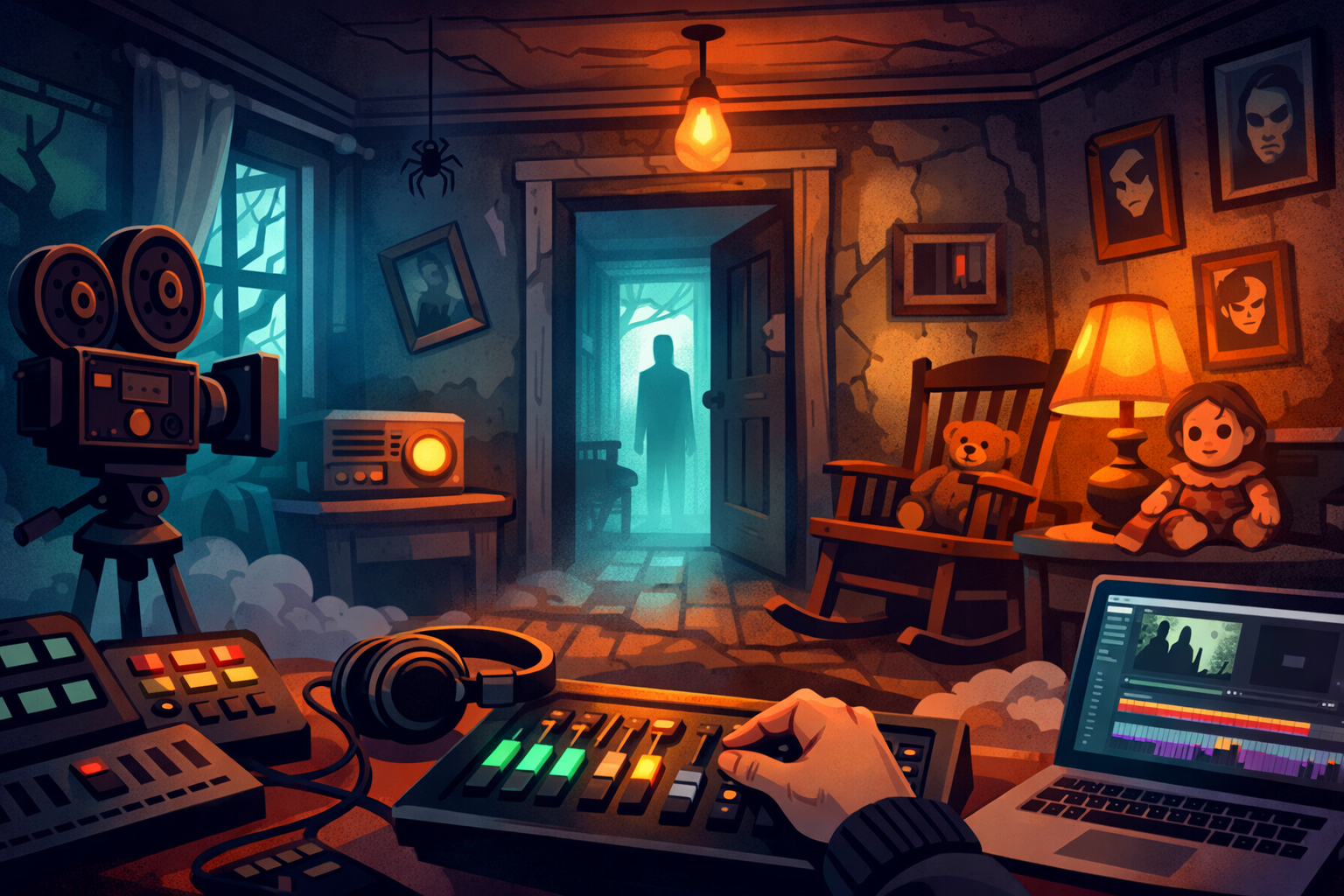
Horror works long before the monster shows up. A viewer usually feels the tension in advance, through sound, light, framing, and timing. That’s what gives a film its weight.
A strong horror movie atmosphere grows from several choices that keep the audience uneasy even in quiet scenes.Fear grows as the film gives your brain space to imagine what might happen next.
That’s how horror movies create fear: they set up expectation, then make the viewer sit inside it.
What the Audience Should Feel Before the First Scare
Jump scares can do, but they don’t create atmosphere on their own. Atmosphere is what makes the jump scare hit harder. Without it, the scene turns into a loud interruption and nothing more. Good horror keeps the viewer tense between major moments.
A few things usually matter most:
- uncertainty about space
- sound that feels slightly off
- limited visual information
- slow timing before release
- details in the frame that suggest decay, intrusion, or absence
These choices sound simple to put into action, but they need to work together. Once one part feels too obvious, the scene starts looking staged rather than unsettling.
Sound Makes the Room Feel Unsafe
If horror has one tool that changes everything, it’s sound. A scene may look ordinary, but the moment the soundtrack adds a low hum, a distant scrape, or a strange silence, the mood changes. Good horror sound design often depends on restraint. Loud stingers have their place, but they’re not enough on their own. What matters more is the feeling that something in the space is off.
A good example is Possum, a film that builds dread through thin, stale, uncomfortable sound rather than constant impact. The noises are sparse, but they stay with you. That kind of approach shows how much tension can come from texture alone.
Even small choices in ambience, silence, and texture can change the whole mood of a scene. When you’re testing those details during editing, it helps to move quickly between different sound versions and file types. A simple tool like Online Audio Converter by Movavi can be useful for converting clips into the format your editor accepts or for preparing alternate ambience layers before the final mix.
Furthermore, music shouldn’t dictate emotion: that flattens the scene. Better music choices leave room for uncertainty. A single sustained note can do more than a full dramatic cue. So can an off-key piano line or tape hiss.
When the music enters:
- Is it widening or tightening the scene?
- Is it warning the audience too early?
- Is it masking sounds that should stay audible?
- Is it the actual part of the scene or just there for the viewer?
That’s where audio production becomes part of atmosphere rather than simple background support.
Light Should Hide as Much as It Shows
Dark images alone don’t create fear. They just make scenes harder to read. The more useful approach is partial visibility. The viewer should see enough to understand the space, but not enough to feel safe inside it.
That’s why many effective horror lighting techniques use limited practical light sources. A lamp in the corner, a bathroom light, a television glow, or a flashlight can shape the frame without flattening it.
Color matters too. Cold light can help make everything feel sickly or distant, while warm low light can make it feel stale, trapped, or dirty. Mixed light sources often work especially well in horror because they make the image feel unstable.
Framing Controls What the Viewer Worries About
Camera placement is one of the most practical parts of horror. A close-up can show fear on a face, but a wider frame often creates more tension because it allows viewers to search. The empty part of the shot starts to matter, like a hallway in the background or a reflection in a mirror that become more threatening than a visible danger.
This is one reason many horror filmmaking techniques depend on patience. The camera doesn’t always rush in for emphasis. Sometimes it stays still and lets the audience do the work. A locked-off shot can be deeply unsettling because the viewer starts expecting a change inside a frame that doesn’t move.
Obstructions help too. Curtains, doorframes, furniture, dirty glass, or bodies cut off at the edge of the image all reduce certainty. Horror often becomes stronger when the camera gives only partial access to the space.
Useful frame choices in horror often include:
- doorways and corridors that suggest depth
- reflections that split attention
- partial obstructions
- overhead shots that make a character look exposed
- locked-off shots that force the viewer to wait
This is another answer to how horror movies create fear. They control what you can see, then make you worry about the rest.
Editing Decides How Long Fear Stays Alive
Tension needs time. If a scene cuts too quickly, the atmosphere never settles. Horror usually performs better when the film allows a beat to hang slightly longer than expected; that pause gives the audience time to listen, scan, and anticipate.
At the same time, slow pacing isn’t enough by itself: the rhythm has to vary. Quiet stretches work better when they’re broken by a sharp cut, an awkward silence, or a sudden change in sound perspective. Fear often grows from timing that feels a little wrong rather than from speed alone.
Editors often review tense moments more than once before locking the cut. In some cases, a rough check in an MP4 editor online is enough to see whether the pause holds or drifts. That kind of small check can save time before you return to the full timeline.
Production Design Makes Fear Feel Physical
Horror movie atmosphere also depends on what the camera sees. Production design is at its best when it feels lived in and slightly damaged. Peeling wallpaper, weak bulbs, damp corners, worn fabric, stained tile, or an old chair placed in the wrong spot can all shift the mood. None of these details need to scream for attention. In fact, they usually strengthen the impact when they seem ordinary at first.
That’s part of why effective horror rarely feels overloaded. A room with one or two troubling details can do more than a set packed with obvious signs of menace. Viewers respond to spaces that feel real enough to enter and wrong enough to distrust.
Final Thoughts
A stunning horror film doesn’t wait for the big scare to start being scary. It begins much earlier, with a small sound or visual detail. That’s how a film earns fear instead of borrowing it from volume.
If you want a stronger horror movie atmosphere, start with the parts viewers feel before they fully notice them. Build the sound first, shape the darkness, let the frame withhold something. Then cut the scene with enough patience for dread to settle in. The effect is cumulative.