 Horror News | HNN Official Site | Horror Movies,Trailers, Reviews
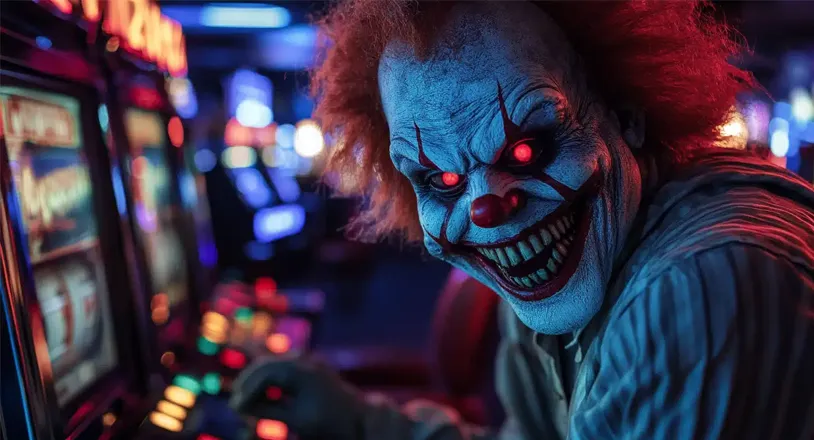
Horror movies have always been problem-solving exercises in disguise. Cinematographers figured out how to pull darkness apart with a single light source. Makeup artists sculpted fear from latex and silicone on budgets that wouldn’t cover a single day of modern post-production. Directors learned — out of necessity, mostly — that the scariest thing in a frame is usually the thing you can’t quite see. All of that accumulated craft did not stay in multiplexes. It moved into digital entertainment, including https://rg.org/en-ca/casinos/bonuses/ and the slot games around them, where how suspense and reward feel is now shaped as much by Hammer Horror as by a random number generator.
Worth tracing how it happened.
The Practical Era: When Fear Had Weight
Horror’s first serious period of technical innovation ran from the early 1930s through the late 1980s. Frankenstein (1931) and Nosferatu (1922) established a grammar of stark lighting, deep shadow, and off-axis architectural angles that communicated unease before a single scare arrived. The monster didn’t need to move. The framing did the work.
By the 1970s and 1980s, practical effects artists pushed further. The Exorcist, Alien, The Thing (1982), An American Werewolf in London (1981) — these set benchmarks for what physical craft could accomplish under pressure. Animatronics, foam latex prosthetics, hydraulic puppetry, in-camera tricks. The defining quality of all of it was tactility: the monsters existed in physical space, the camera registered it, and audiences felt it in a way that is genuinely harder to fake than it sounds.
Fear arrived slowly. When it resolved, there was real weight behind it.
The Digital Shift and What Survived
CGI matured through the 1990s and early 2000s. What the best filmmakers of that period understood quickly was that digital tools worked alongside practical ones, not instead of them. The Ring (2002) used digital enhancement to amplify what was already disturbing in its practical imagery. It (2017) extended what a prosthetic Pennywise could do. Ari Aster’s Hereditary (2018) barely used effects at all — it borrowed compositional discipline from older horror: static framing, ambient sound, slow revelation.
What crossed over into the digital era was not a specific technique. It was a set of working principles. Constrained color palettes. Sound built around low drones, sudden silences, and intrusions at unexpected moments. Sets that communicate threat before the story confirms it. Those principles are not medium-specific. They work in a dark auditorium, in a streaming window, and — it turns out — in a casino game lobby.
| Horror Era | Dominant Technique | Core Visual Language | Digital Legacy |
| Silent/Early Sound (1920s-30s) | Makeup, shadow, set design | High-contrast noir, architectural threat | Dark UI framing, negative space |
| Practical Golden Age (1970s-80s) | Latex, animatronics, in-camera effects | Tactile dread, slow reveal | Texture-heavy game art, analogue aesthetics |
| CGI Transition (1990s-2000s) | Hybrid practical/digital | Atmospheric integration, surreal scale | Layered animation, particle effects |
| Modern Psychological Horror (2010s-present) | VFX-augmented composition | Restraint, ambient tension | Sound-driven UX, narrative bonus arcs |
How Casino Game Design Picked It Up
Early horror-themed slot machines were franchise exercises. Known brands on standard reel mechanics. Not much going on visually beyond brand recognition doing the heavy lifting.
As digital platforms replaced mechanical cabinets, the design tools available to slot developers converged with what VFX artists had been using for years — real-time rendering, layered audio, particle systems, animated sequences triggered by game events. Developers working in horror realized they could borrow the atmospheric principles that made the films work, not just their characters. Color palettes of deep purples, blacks, and blood reds. Sound beds built on low-frequency drones, with sudden stingers timed to reel outcomes. Animation sequences structured like a creature reveal — slow, partially obscured, resolved only at the last possible moment. Functional choices, all of them. The same things that hold attention through a horror scene hold it through a game session.
One contribution from the practical era deserves specific mention: the VHS aesthetic. Several modern horror-themed slot titles deliberately reference the grain, color distortion, and wear of late-night rental horror. That nostalgia is precise. It targets people who formed their relationship with the genre through physical media, at particular ages, under particular circumstances. Not decoration — actual targeting.
Atmosphere as Mechanic
The more interesting shift over the past decade is that atmospheric principles have moved into game mechanics, not just visual surfaces.
How it actually works in practice:
- Progressive tension systems that hold back audio and visual intensity early in a session and escalate it as bonus rounds approach — the slow-burn structure that psychological horror has used for decades.
- Narrative bonus arcs structured in chapters, where each trigger reveals a further piece of a horror story rather than dropping an isolated reward.
- Held frames before symbol reveals — a brief darkness before the animation completes, borrowed from the beat-before-the-scare that horror cinematographers refined over generations.
- Ambient sound loops calibrated to stay just below conscious awareness, increasing unease without interrupting focus. The Shining used this approach with score and production sound in 1980. Modern slot games run the same logic in a browser tab.
The emotional effect — more sustained engagement, shorter perceived session time, an outcome that feels narratively earned — holds in both contexts. The medium changes. The mechanism does not.
What’s Worth Paying Attention To
A few things are worth keeping in mind when exploring horror-themed casino content:
- Sound is the tell: Games that have genuinely invested in atmospheric audio reflect broader design seriousness. Thin, repetitive loops mean the horror theming is surface-level.
- Mechanics matter more than symbols: A skull on a reel is not a horror game. A bonus structure built around tension, sequential reveals, and delayed resolution is.
- Read the terms: Horror-themed games are designed to keep you emotionally engaged — that’s their appeal, and also a reason to understand bonus conditions and wagering requirements before playing.
- Licensed vs. original: Games built around film licenses vary widely in how deeply they integrate cinematic principles versus using brand recognition as a substitute for actual atmosphere.
Horror spent a century learning how to make an audience feel something before the scary part arrived. Turns out that skill travels.