 Horror News | HNN Official Site | Horror Movies,Trailers, Reviews
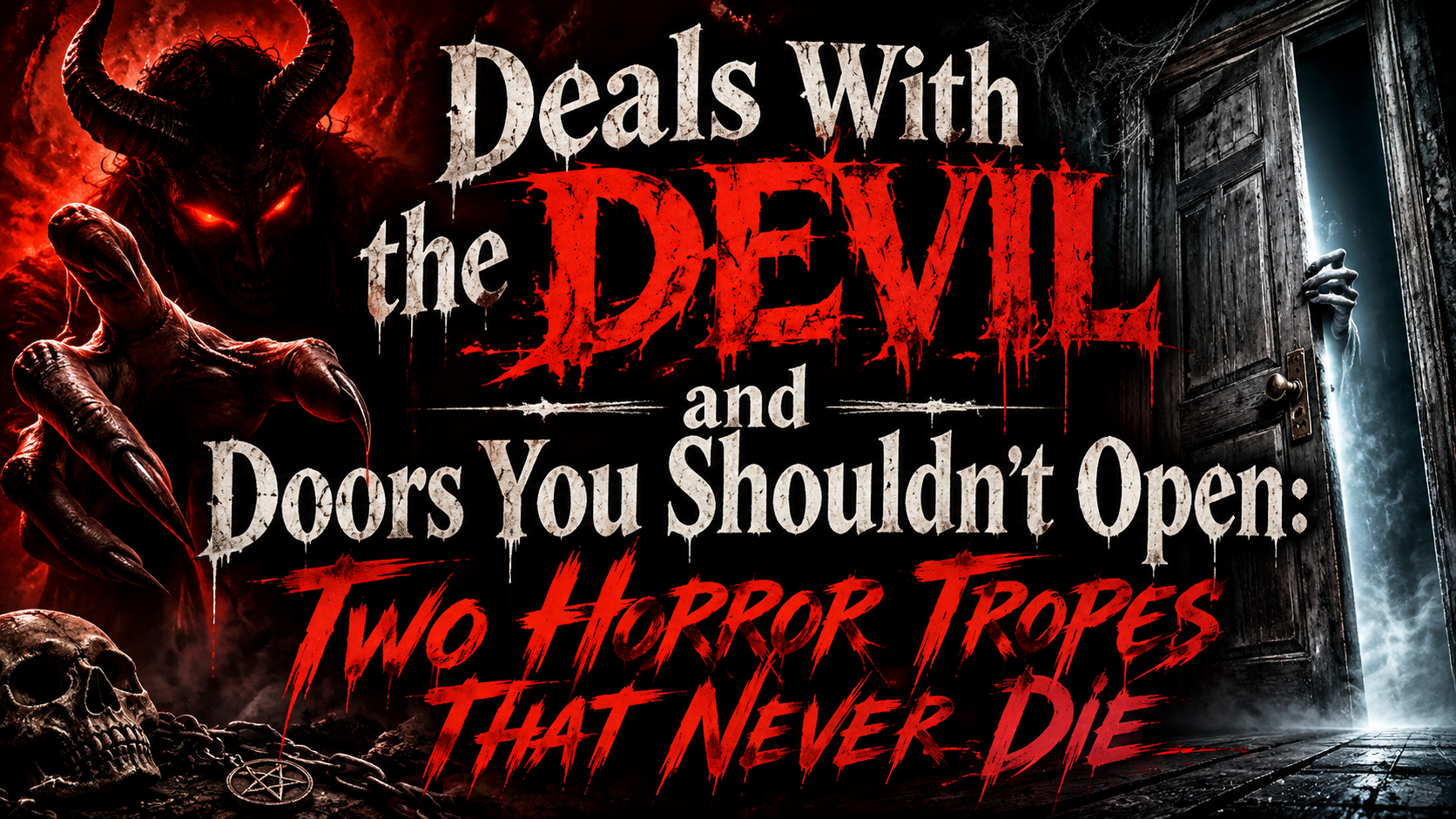
Some horror ideas are so old that we barely notice them anymore. They show up in Renaissance plays, Victorian ghost stories, blockbuster films and late-night paperbacks, and they still work every time. Two of the most durable are the deal with the devil and the forbidden door. One is about wanting something so badly that you’ll pay any price. The other is about curiosity that refuses to listen to warnings.
Both tropes have spread far beyond the screen. Let’s dig into where they came from, why they still get under our skin and where they keep turning up in modern pop culture.
The Devil Always Collects
The idea of trading your soul for power, knowledge or riches goes back centuries, but it found its definitive form in the legend of Faust. Christopher Marlowe turned it into “Doctor Faustus” in the late 1500s, and Goethe returned to it in his own epic version. The structure hasn’t changed since: a person wants more than life has given them, a smooth-talking stranger offers it, and the bill comes due at the worst possible moment.
American folklore gave the story its own twist with the crossroads legend, the tale of a blues musician who meets a dark figure at midnight and walks away with impossible talent. Hollywood has played with the formula again and again. “Rosemary’s Baby” turned the bargain into domestic paranoia. “The Devil’s Advocate” dressed the devil in a tailored suit and set him loose in a Manhattan law firm. Stephen King’s “Needful Things” imagined the devil as a small-town shopkeeper who sells you exactly what you want, at a cost you never see coming.
The trope has even crossed into gaming. In Devil’s Treasures Bonus Coin, a Hold & Win game from the studio JILI, the devil sits in a fiery underworld guarding his hoard of gold. It’s the Faust bargain stripped to its essentials: the treasure is right there, and the only question is whether you’ll reach for it.
Why does it still work? Because the devil never forces anyone. Every victim says yes. That’s the real horror: the temptation is reasonable, and any of us might take the deal.
Whatever You Do, Don’t Open That Door
If the devil’s bargain is about greed, the forbidden door is about curiosity. The classic version is “Bluebeard,” the fairy tale Charles Perrault published in 1697, in which a new wife is given every key to her husband’s castle and told to stay out of one small room. Of course she opens it, and what she finds inside has haunted readers ever since.
Modern horror keeps returning to that room. In Kubrick’s “The Shining,” it’s Room 237, a door the Overlook Hotel practically dares Danny to open. In “Coraline,” it’s a tiny bricked-up door that leads to a world that looks better than home, right up until it doesn’t. “The Cabin in the Woods” built an entire film around a cellar full of objects that the characters really should have left alone.
The locked room has its own echoes outside of film, too. JILI’s 3 Billion Vaults, one of the studio’s newer slot releases, is built around exactly that pull: sealed vaults that promise riches to anyone willing to see what’s inside.
The trope works because the audience is always one step ahead. We know the door is a bad idea. We shout at the screen. And deep down, we want to see what’s behind it just as badly as the character does.
When the Two Tropes Meet: Treasure Behind Locked Doors
The most delicious horror happens when greed and curiosity collide. Think of the burglars in “Don’t Breathe,” who break into a house because they’re sure there’s a fortune hidden inside, only to discover that the real danger is waiting in the dark. Locked treasure is the perfect bait: it promises a reward, and it hides a threat.
The Tropes Beyond the Screen
These ideas are so powerful that they’ve migrated into almost every kind of entertainment. Video games are full of cursed bargains and sealed doors. Escape rooms sell the thrill of unlocking what’s been hidden. Even online slot games, which love a strong theme, have borrowed both tropes wholesale, as the two games above show.
Games like these mostly turn up at free-to-play sweepstakes casinos, which are for adults only and vary in availability by state. Like any horror story, they’re best enjoyed in small doses, with limits set before the lights go out.
Why We Keep Coming Back
At their core, both tropes are warnings about ourselves. The devil only wins because people want more than they have. The door only matters because people can’t stand not knowing. Horror holds up a mirror to those impulses, lets us indulge them safely for a couple of hours and then sends us home a little more careful.
That’s why, centuries after Faust signed his contract and Bluebeard’s wife turned the key, we’re still telling these stories. The settings change, the villains get new costumes and the doors lead to new places. But the bargain and the locked room remain, waiting for the next person who just can’t resist.