 Horror News | HNN Official Site | Horror Movies,Trailers, Reviews
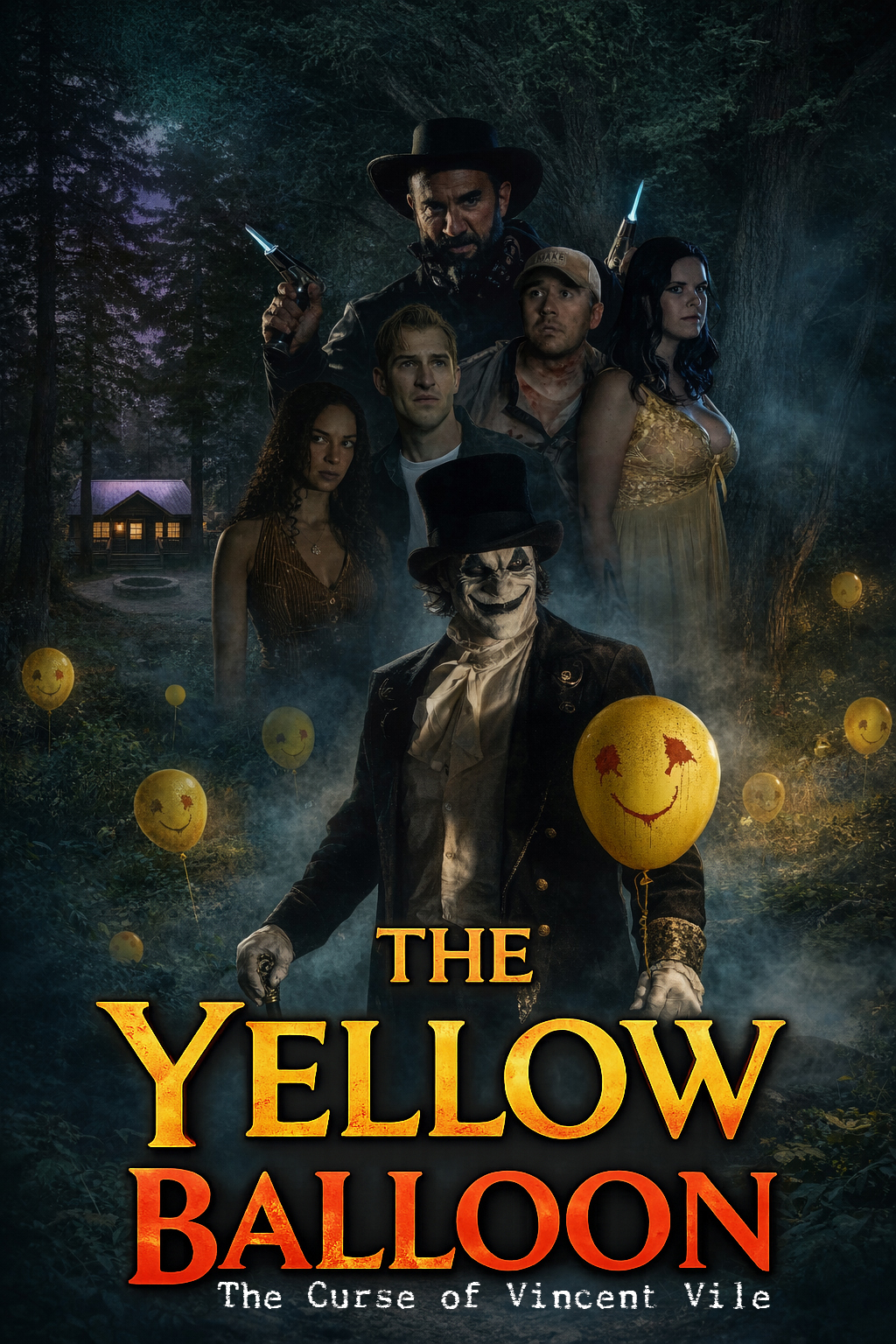
SYNOPSIS:
The Yellow Balloon (2026) is a horror-comedy where a group of friends, seeking to help their friend Mia recover from a breakup at a remote cabin, are terrorized by a demonic, occult ringmaster named Vincent Vile, who uses cursed VHS tapes and violent, haunted yellow balloons to turn them against one another.
REVIEW:
The Yellow Balloon (aka The Yellow Balloon: The Curse of Vincent Vile) is a new horror-comedy directed by Jason D. Morris and written by Robert Carrer (who also plays the role of Travis) under the production company Dead End Films. The company previously released its 2025 feature, “The Space Rodent”, with The Yellow Balloon serving as the team’s latest release for 2026.
While researching Dead End Films, I discovered the team has produced several projects that have gone on to receive awards in various categories. I mention that at the start of this review because after watching The Yellow Balloon, I found myself genuinely interested in going back and checking out more of their catalog of works. Professionally shot, edited, produced, and framed, their films — despite operating on a modest budget — still manage to capture the spirit of classic independent horror films with confidence and creativity that can only be described as bizarre. In many ways, the The Yellow Balloon reminded me of movies like 2008’s Blood on the Highway, which succeeded by embracing absurdity, practical effects, and offbeat humor while still always keeping its target audience firmly in mind.
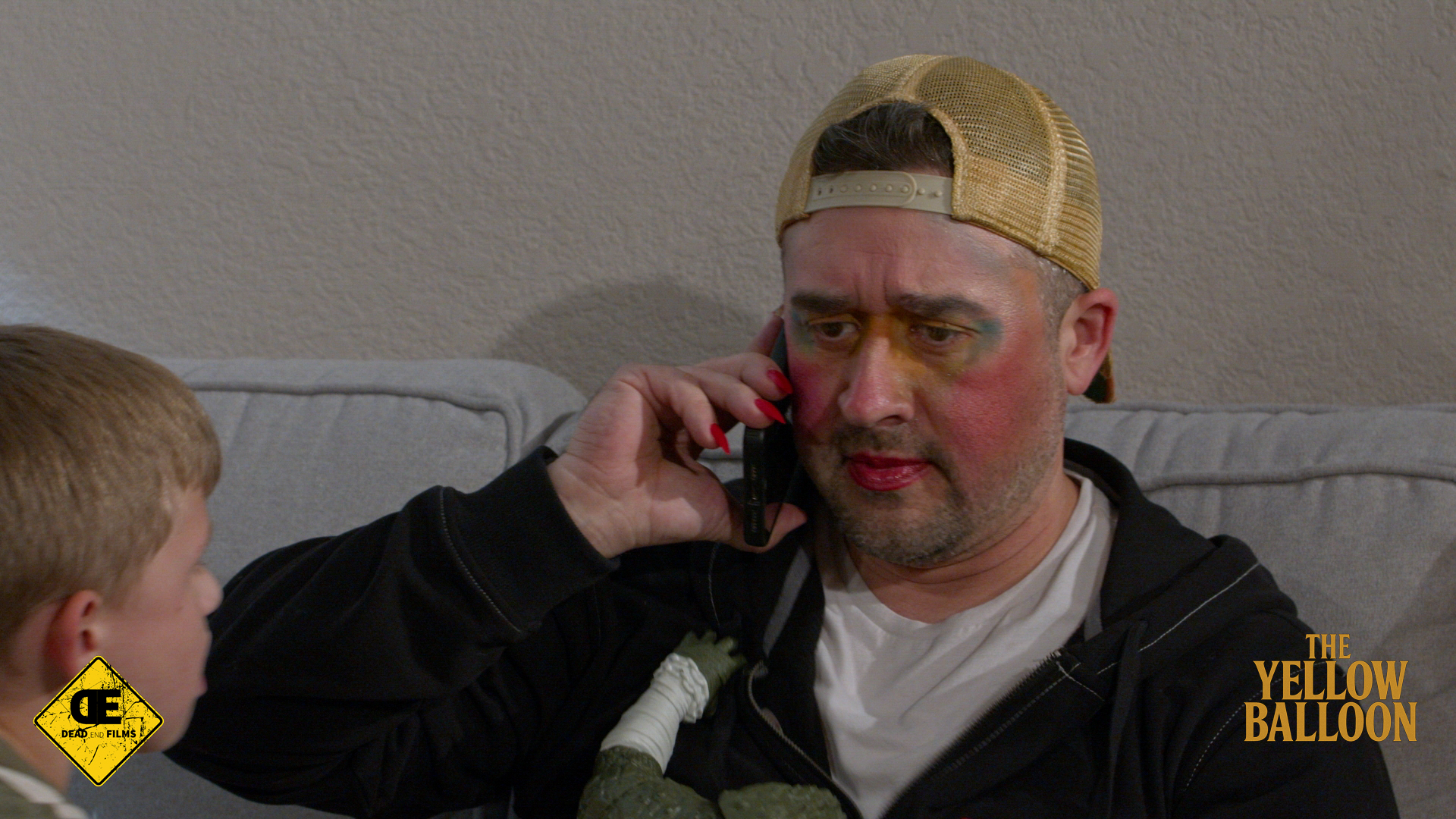
The Yellow Balloon plays as both a tribute and a love letter to the horror films that inspired it (even openly referencing some of those influences during its opening scene). Drawing inspiration from films such as The Evil Dead, The Ring, and other cult horror staples, the movie makes no attempt to hide where its roots come from. Instead, it embraces those inspirations while injecting enough comedic surprises and personality to give the experience its own identity.
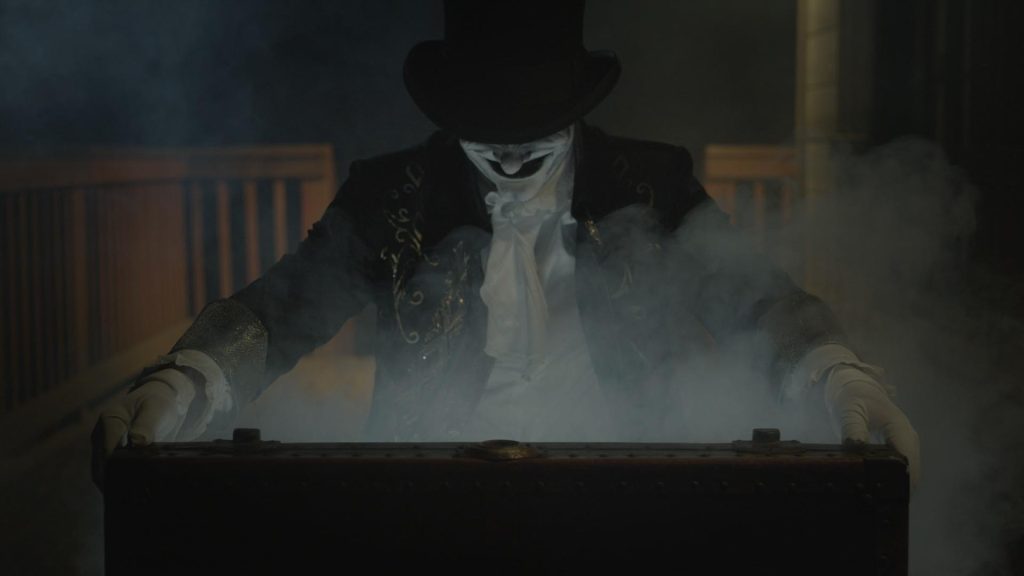
The film wastes little time introducing its central antagonist, Vincent Vile, played by Scott Somers. Vincent immediately feels like a strange hybrid between Pennywise and 1994’s Funnyman — an eerie, theatrical clown figure who constantly carries yellow balloons wherever he goes. The decision to use yellow balloons instead of red helps visually separate the character from the inevitable Pennywise comparisons, though the similarities are made by a shared supernatural nature.
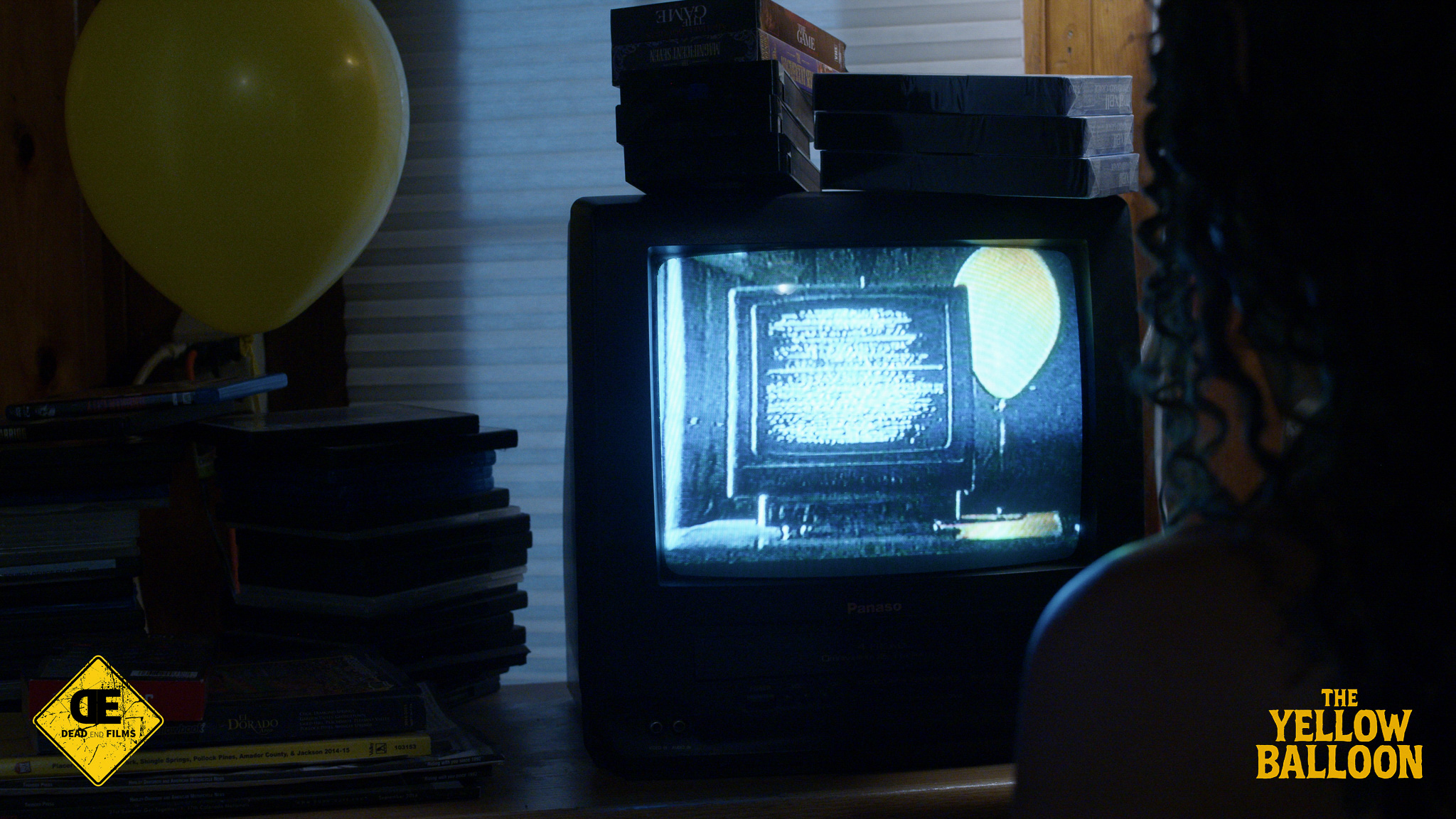
At first, Vincent’s introduction left me somewhat confused, largely because the film intentionally takes its time revealing exactly what he is and how he operates. As the story unfolds, however, it becomes clear that Vincent is some form of supernatural entity who manipulates people through a mysterious “Yellow Balloon” B&W video after they are coaxed into watching it. Those who watch it become possessed, often descending into bizarre and violent killing sprees.
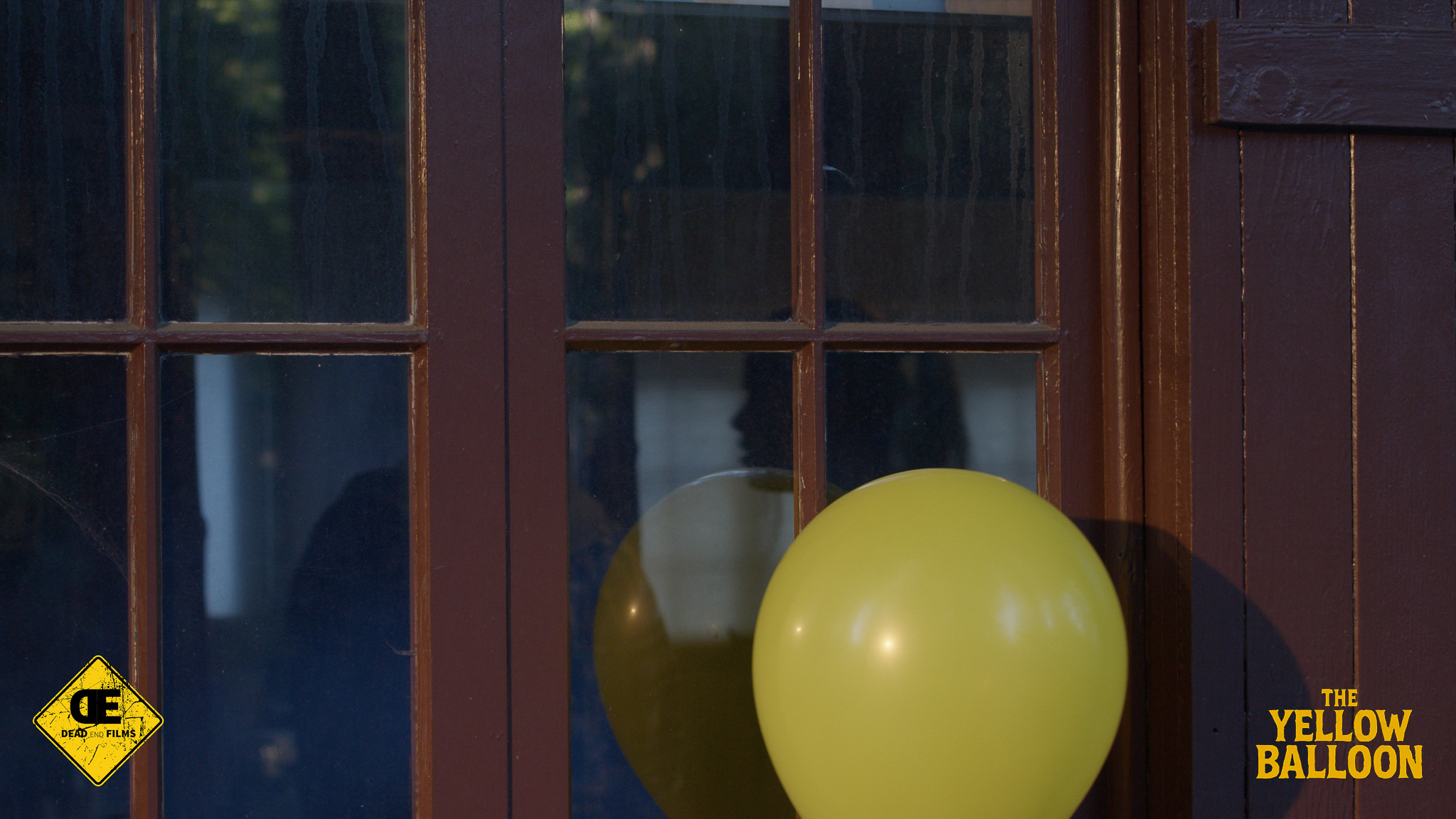
What I appreciated most about Vincent is that he never feels like a generic slasher villain whose only motivation is only to murder. Instead, the character leans heavily into theatricality and dark humor. Somers gives Vincent a Shakespearean style of speech performance that makes him feel more like a sinister performer than a traditional horror villain. He’s constantly entertaining, taunting, and narrating the chaos around him with unsettling enthusiasm. The film never fully explains why he exists or what drives him beyond his apparent enjoyment of spreading mayhem…..but that ambiguity ultimately still works in the character’s favor.
In retrospect, there were moments where I felt Vincent may have benefited from speaking a little less and relying more on intimidation and presence. Still, that over-the-top delivery is clearly part of the character’s design and the film’s comedic identity. And yes — there are plenty of yellow balloons throughout, often used as bizarre supernatural tools for capturing souls, torture, or simply delivering unexpected comedic moments.
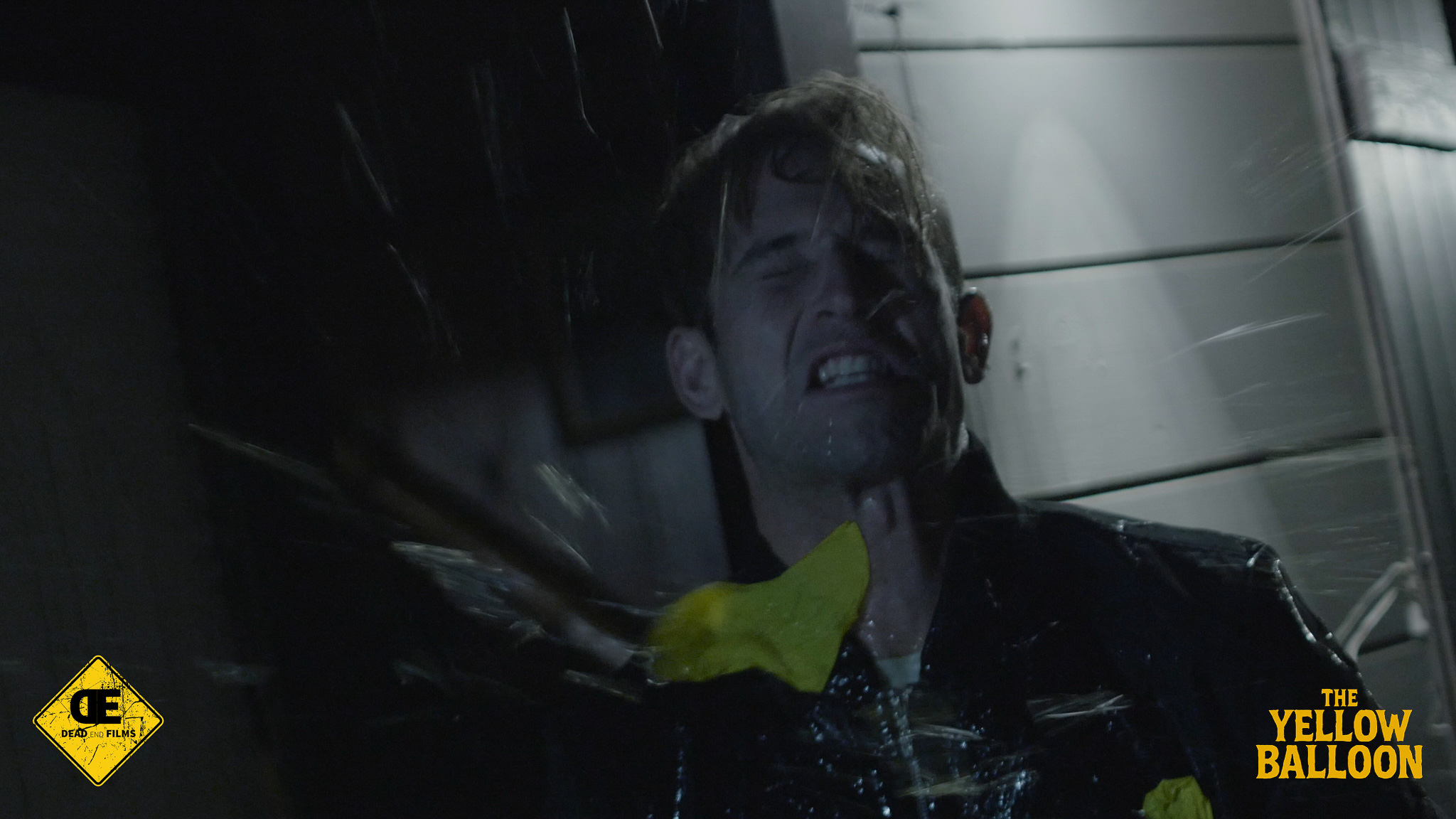
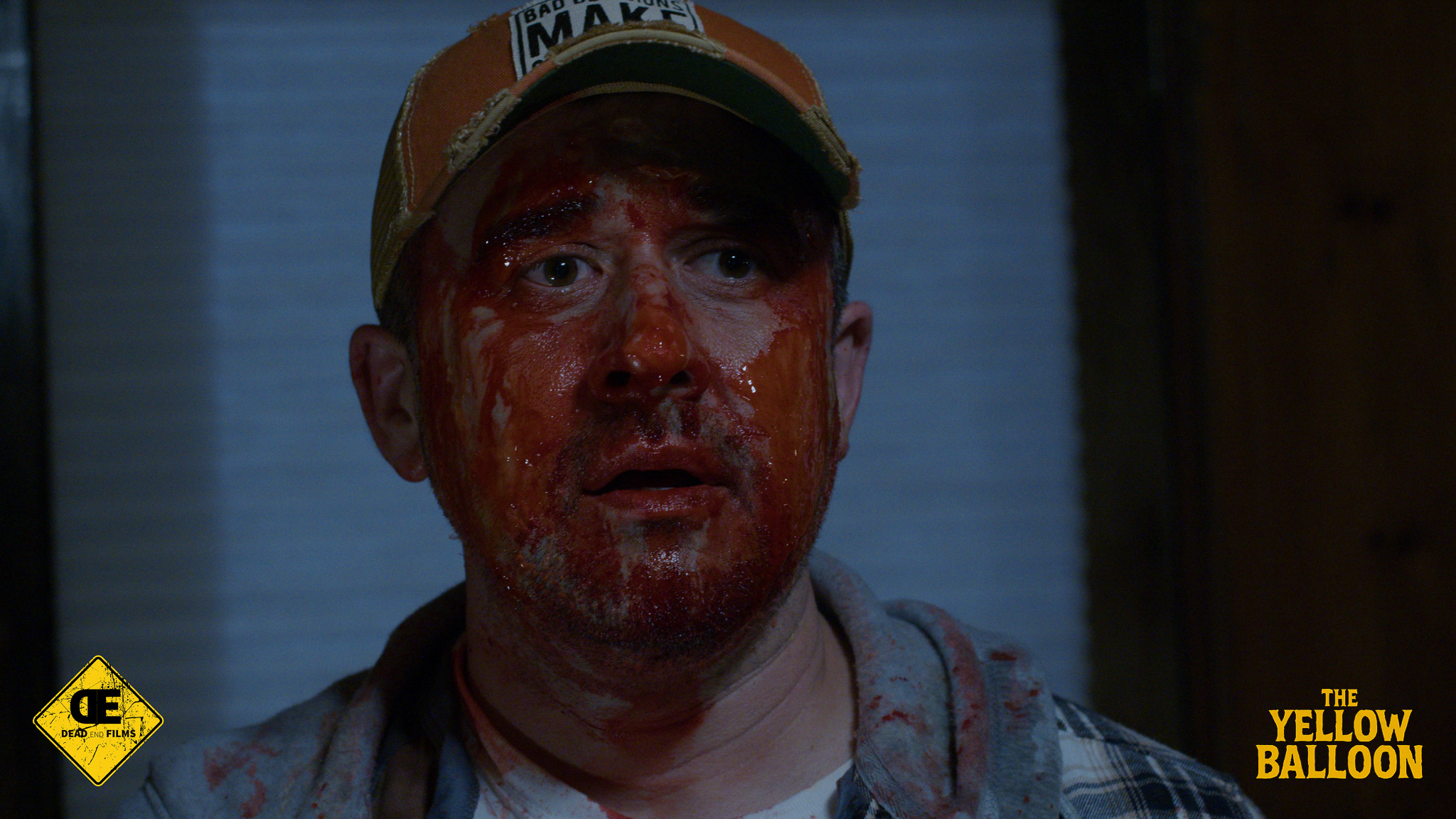
The cast as a whole works surprisingly well together, with Robert Carrera providing much of the film’s comedic energy. On that note, the movie is genuinely funny at times. While it certainly delivers its share of Evil Dead-inspired gore and splatter, it also contains several sharp comedic exchanges filled with absurd humor and intentionally over-the-top dialogue. I won’t spoil the best jokes here, but some of the interactions between the ensemble cast were among the film’s strongest moments.
Most of the effects appear to be practical, with only a smaller amount of CGI used throughout the film. That practical approach gives many of the horror sequences a more charming and gritty feel that fits the movie’s tone well.
At first glance, many viewers will probably experience that familiar feeling of “I’ve seen something like this before.” But if you allow yourself to settle into the film’s bizarre world and accept its intentionally exaggerated tone, The Yellow Balloon becomes much easier to appreciate for what it is: a low-budget horror-comedy more interested in entertaining its audience than reinventing the genre.
Like me, some viewers may find themselves wondering why so many characters seem oddly calm about the existence of a well-dressed supernatural clown wandering through the darkness with yellow balloons in hand. Realistically, that alone should send everyone running. But within the spirit of the film, Vincent Vile operates almost like a twisted narrator — already fully aware that chaos is about to unfold around him.
Overall, The Yellow Balloon was an enjoyable surprise. It embraces its influences proudly, delivers several genuinely funny moments, and introduces a memorable villain with plenty of personality. Dead End Films clearly understands the type of audience they are making these movies for, and for fans of absurd, low-budget horror-comedies with practical gore and dark humor. this one is worth checking out.
Those interested in learning more about Dead End Films and their productions can visit www.deadendfilms.org.