 Horror News | HNN Official Site | Horror Movies,Trailers, Reviews
Atlanta has quietly become one of the most important production centers in North America. Over the past decade, the city’s film infrastructure has expanded dramatically, drawing productions away from traditional hubs like Los Angeles and New York. For horror filmmakers in particular, Atlanta offers something rare: a combination of technical sophistication, creative talent, and adaptable studio environments that can be transformed into anything from abandoned asylums to haunted Southern estates.
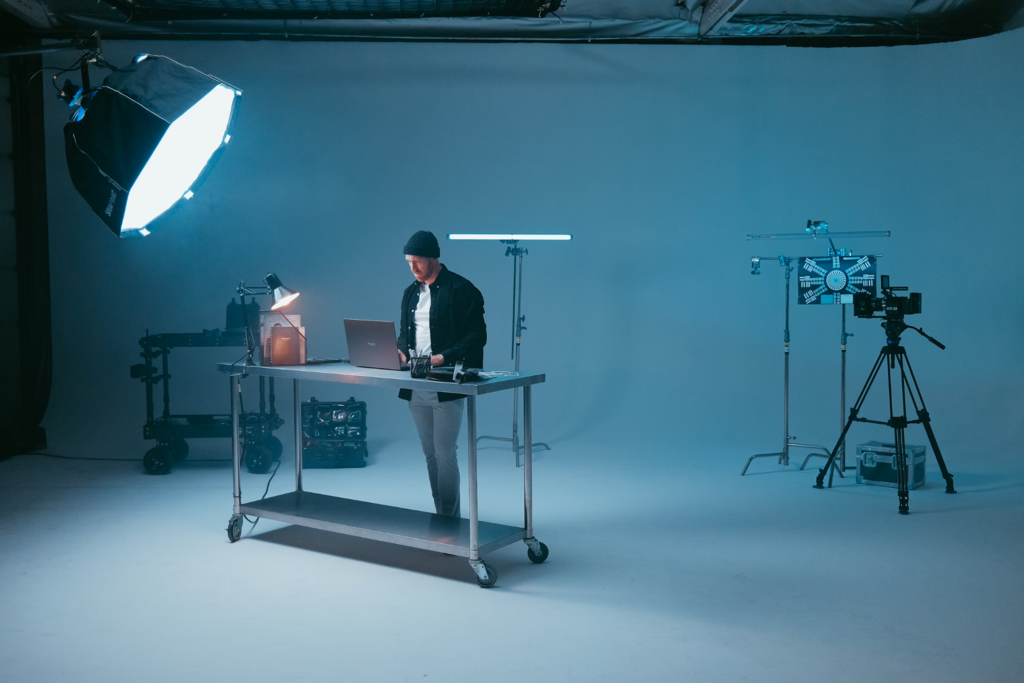
The city’s appeal isn’t just about tax incentives. Atlanta has developed a deep bench of experienced crew members, specialized vendors, and production facilities that understand the unique demands of genre filmmaking. Horror productions require specific technical capabilities—advanced lighting rigs for shadow work, soundproofing for controlled audio environments, and flexible spaces that can be radically reconfigured between shoots.
Why Atlanta’s Studio Infrastructure Supports Horror Production
The technical requirements for horror filmmaking are more demanding than many realize. Creating sustained tension on screen requires precise control over every sensory element, which means the physical production space matters enormously. Atlanta’s studio facilities have evolved to meet these needs:
- Acoustic Control: Professional soundproofing allows filmmakers to capture clean dialogue while adding precisely timed sound effects in post-production. External noise contamination can ruin takes in horror scenes where silence builds dread.
- Lighting Infrastructure: Horror cinematography depends on sophisticated lighting setups that create specific moods. Studios equipped with grid systems and dimming controls enable the low-key lighting and chiaroscuro effects that define the genre.
- Spatial Flexibility: Horror sets often require unusual configurations—long corridors for chase sequences, confined spaces for claustrophobic tension, or multi-room layouts for complex blocking. Adaptable studio spaces allow production designers to build exactly what the script demands.
- Technical Support: Access to experienced gaffers, grips, and set construction teams who understand genre-specific requirements can dramatically reduce production time and costs.
Georgia has consistently ranked among the top states for film production volume, with horror and thriller genres representing a significant portion of that activity.
The Evolution of Atlanta’s Studio Market
Atlanta’s transformation into a production hub didn’t happen by accident. The state’s film tax credit program, established in 2008, created economic conditions that attracted major studios. But the infrastructure that followed—purpose-built soundstages, equipment rental houses, and a growing pool of specialized talent—has proven equally important.
For independent horror filmmakers, this ecosystem provides access to resources that would be prohibitively expensive in other markets. A production that might require a $500,000 budget in Los Angeles can often be executed for $300,000 in Atlanta without sacrificing quality. The cost differential comes not just from lower rental rates but from the efficiency of working in a market designed to support production.
The variety of available spaces has also expanded significantly. Filmmakers can now choose from converted warehouses in industrial districts, purpose-built soundstages with full production support, or hybrid spaces that offer both interior and exterior shooting options. This diversity allows productions to match their specific needs with appropriate facilities rather than compromising their creative vision.
West Atlanta’s Emerging Production Corridor
While much attention has focused on Atlanta’s established studio districts, the western part of the city has emerged as a particularly interesting option for horror productions. The area offers a different character than the more polished facilities closer to downtown—something that can work to a horror production’s advantage.
West Atlanta’s studio spaces often occupy older industrial buildings that retain architectural features difficult to replicate on a constructed set. Exposed brick, aged concrete, and weathered metal surfaces provide authentic texture that enhances period pieces or contemporary horror with a gritty aesthetic. These spaces also tend to offer more square footage per dollar, allowing productions to build larger sets or maintain multiple configurations simultaneously.
The neighborhood’s industrial character extends beyond the studio walls. Exterior locations in West Atlanta can double for a range of settings, from abandoned factories to working-class residential areas, providing production value without the logistical complexity of distant location shoots. For productions working with limited budgets, this proximity between studio and location work can significantly reduce transportation costs and scheduling complications.
Several productions have discovered that Studio Space Atlanta, Eagle Rock Studios Atlanta, and Third Rail Studios each bring distinct advantages to horror projects — though for those prioritizing affordability alongside technical capability, affordable film studio rentals in West Atlanta with room for elaborate practical sets remain the corridor’s primary draw.
Designing Effective Horror Environments in Studio Spaces
Creating horror sets that work on camera requires understanding how technical elements combine to produce psychological effects. The best horror production designers think about their sets as machines for generating specific emotional responses, with every element calibrated to support that goal.
Spatial design plays a crucial role. Horror often exploits our instinctive responses to certain environments—confined spaces trigger claustrophobia, long corridors create vulnerability, and rooms with multiple exits generate uncertainty about where threats might emerge. Studio spaces allow designers to exaggerate these features beyond what natural locations provide, intensifying their psychological impact.
Lighting design in horror requires a different approach than other genres. Rather than illuminating scenes for clarity, horror cinematographers often work with selective lighting that reveals some elements while obscuring others. This technique, known as chiaroscuro, creates visual uncertainty that keeps audiences in a state of heightened alertness. Achieving these effects requires studio spaces with sufficient ceiling height for overhead lighting rigs and electrical capacity for complex setups.
Sound design considerations should influence set construction from the beginning. Hard surfaces create reverb that can make dialogue difficult to record cleanly, while too much sound absorption can make spaces feel unnaturally dead. Production sound mixers often work with set designers to find the right acoustic balance, using strategic placement of sound-absorbing materials to control reflections without eliminating them entirely.
Practical Considerations for Studio Selection
Choosing the right studio space requires evaluating factors beyond square footage and rental rates. Horror productions have specific technical needs that not all facilities can accommodate, and mismatches between production requirements and studio capabilities can create expensive problems during shooting.
Power capacity often becomes a limiting factor. Horror cinematography typically requires more lighting instruments than other genres, and the cumulative electrical load can exceed what older facilities provide. Before committing to a space, productions should verify available amperage and the location of electrical distribution, as running additional power can add significant costs.
Ceiling height affects both lighting and set construction options. Spaces with 16-foot or higher ceilings provide room for overhead lighting rigs and allow taller set walls, which prevents cameras from shooting over the top of sets. Lower ceilings can work for specific scenes but limit flexibility.
Loading access matters more than many first-time producers realize. Horror sets often involve large set pieces, and facilities without proper loading docks or freight elevators can create logistical nightmares. The time and labor required to move materials through inadequate access points can consume budget that would be better spent on screen.
Climate control is another consideration, particularly in Atlanta’s humid summers. Sets with extensive fabric elements or period furnishings can be damaged by moisture, and crew comfort affects productivity during long shooting days. Studios with reliable HVAC systems prevent these problems.
Proximity to support services—equipment rental houses, prop shops, lumber yards, and hardware stores—can significantly affect production efficiency. Time spent traveling to acquire materials or replace failed equipment is time not spent shooting, and in production, time is money.
Moving Forward with Your Horror Project
Atlanta’s studio infrastructure provides horror filmmakers with resources that were once available only to major studio productions. The combination of technical facilities, experienced crew, and cost efficiency has made the city a genuine alternative to traditional production centers.
For filmmakers planning horror projects, the key is matching your specific needs with appropriate facilities. A single-location psychological thriller has different requirements than a creature feature with extensive practical effects. Understanding these requirements before beginning your studio search will help you identify spaces that support rather than constrain your creative vision.
The city’s production community is generally accessible to newcomers willing to do their homework. Attending local film industry events, connecting with Atlanta-based crew members, and visiting facilities before making commitments can provide insights that aren’t apparent from website listings or phone conversations.
As horror continues to prove its commercial viability—both in theatrical release and streaming platforms—Atlanta’s position as a production hub for the genre seems likely to strengthen. The infrastructure exists, the talent pool is deep, and the economic fundamentals remain favorable. For filmmakers ready to take advantage of these conditions, the city offers genuine opportunities to create ambitious horror projects that would be difficult to execute elsewhere.
The question isn’t whether Atlanta can support professional horror production—recent years have definitively answered that. The question is whether filmmakers will take full advantage of what the city’s studio spaces and production infrastructure make possible.