 Horror News | HNN Official Site | Horror Movies,Trailers, Reviews
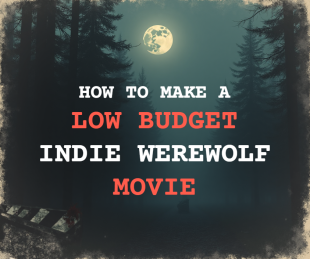
A DISCUSSION WITH EDDIE FRIGHT
How do you create a believable werewolf on a low budget indie film?
1. Design the Creature Around What You Can Actually Pull Off
Don’t start with “Underworld.” Start with what you can physically build.
Pick one of these three lanes:
Silhouette Monster — tall, lanky, long limbs, glowing eyes. Cheap, terrifying.
Partial Transformation — claws, teeth, snout, fur patches. You never show the full creature.
Full Suit — only if you have a dedicated FX person and a performer who can move well.
You can make any of these look pro if you commit to the style.
2. Shoot the Creature in Darkness, Backlight, or Obstruction
Low budget horror lives in:
Fog
Backlighting
Silhouettes
Quick cuts
Tight close-ups
Things moving just outside the frame
The less you show, the more the audience fills in the gaps.
Rule: Never show the werewolf in clean, bright light unless you have a Hollywood budget.
3. Use “Puzzle Piece” FX Instead of a Full Monster
This is where indie films win.
Build:
One great arm with claws
One great snout/muzzle
One great foot
One great patch of fur
One great jaw with teeth
Then shoot:
Close-ups of claws scraping a door
A snout breathing in fog
A silhouette with glowing eyes
A hand grabbing someone
A jaw biting into something (cut away before impact)
The audience mentally assembles the creature.
4. Prioritize Movement Over Makeup
A mediocre suit with great movement beats a great suit with stiff acting.
Coach your performer to move like:
A starving animal
A predator that stalks then explodes
Something that shouldn’t exist
Study wolves, big cats, and contortionists.
5. Use Camera Tricks to Sell the Illusion
These are cheap and powerful:
Dutch angles to distort size
Low angles to make the creature look huge
Whip pans to hide cuts
Foreground objects to obscure the creature
Fast shutter speed for frantic attacks
Slow shutter speed for dreamlike stalking
You’re not filming a creature—you’re filming fear.
6. Let Sound Do Half the Work
A believable werewolf is 50% audio.
Layer:
Wolf growls
Pig squeals
Bear breaths
Human whispers
Metal scraping
Low-frequency rumbles
If the sound is terrifying, the creature becomes terrifying.
7. Use Practical FX for Transformation
Skip CGI unless you have a pro.
Use:
Hair punching through latex
Veins bulging with air bladders
Bones “cracking” with sound design
Quick cuts between stages
Shadows to hide transitions
Think American Werewolf in London but done with editing instead of animatronics.
8. Spend Your Budget on These 3 Things
If you only invest in a few areas, make it these:
One hero piece (snout, arm, or mask)
Good fur (cheap fur looks like a Halloween store)
A performer who can move like a beast
Everything else is smoke, shadows, and editing.
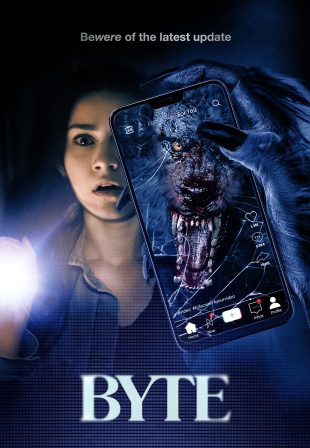
What inspired you to make the movie, Byte?
Jeff Miller, the producer, and I met back in 2016 at the Clown Town premiere. I kept in touch with Jeff over the years, and then in the fall of 2022, the stars lined up and Jeff asked me to write a script with a werewolf computer controller. It started out as a gag—I don’t think he was serious about it. I replied back and said that it was actually a cool idea if we added to it and made it believable. I came up with the idea of adding the ritual to an online app, and Jeff loved it! We put the story together, and then I started writing the script in the winter of 2022–23.
What kind of obstacles did you have to overcome when making Byte?
There are always obstacles in indie filmmaking. That being said, we didn’t have too much of that other than scheduling. One of the actors was still in high school, so we had to be mindful of his schedule. We also had a situation where we shot the final scene at the Bye Bye Man house, and we only had it for two days. We had to shoot at night, and at the time it didn’t get dark until 9:00, which made it extra hard to get everything done before daybreak, around 6:30 a.m.
Why do you think werewolf movies resonant with audiences?
I think a werewolf is that feeling made flesh. It’s the monster you become when you’re pushed too far. Audiences connect to that because it’s universal. “I think that I’m still in here somewhere” is powerful—it makes the creature tragic, not just scary.
What werewolf movies would you go to as perfect research material?
Ginger Snaps, The Howling, and An American Werewolf in London and Paris.
From camera to editing, what equipment works best for independent filmmaking?
We use the Canon C300, and we edit on Adobe Premiere Pro. Mick, our DP/editor, is the Woz of indie film. I ask him, “Mick, can we do this?” and he says, “Let me get back to you.” He always comes back with the mission accomplished!
How do you make a movie stand out in the crowd in an oversaturated streaming market?
You know, Michael, that’s something we’re still trying to figure out. We were able to do that with The Melon Heads because of the urban legend and myth attached to it. We sold out back-to-back theaters that said it was only local. Trying to get it globally—well, the jury is still out on that.
What advice would you give a first time filmmaker?
Advice I would give? When I started out 20 years ago, I knew nothing about filmmaking. I didn’t go to film school—I was self-taught. I read Lloyd Kaufman’s How to Make Your Own Damn Movie and watched a lot of films. That said, I’ll tell you what I did have: desire. That desire drove me harder than anything else. I had such a passion for filmmaking. I loved every part of it—the writing, casting, directing, special effects, and the editing process. Even to this day, I still love it. And you know what the Buddha says? The Buddha says, “Follow your bliss.” And that’s what I did. So, in closing, my advice to anyone starting out is this: don’t let anyone tell you that you can’t—because you can. Especially now, with YouTube, there’s tons of material out there to help you learn for free.
What is the story of Eddie Fright and Fright Teck Pictures?
I came up with Fright Teck Pictures back in 2005. You see, I’m a veteran DJ. I played records back in the ’90s and worked with a famous DJ who has since passed away. He had a company called Data Tracks, and I always thought it was such a catchy name. I wanted to create something like that. Since I make horror films, I came up with “Fright,” and “Teck” came from technology and techno records. I combined my love for horror films and techno, and Fright Teck Pictures was born. And well, Eddy Fright just works—it goes perfectly with Fright Teck.
Where can werewolf fans watch Byte?
Tubi TV! We really want our audience to watch it on Tubi.