 Horror News | HNN Official Site | Horror Movies,Trailers, Reviews
 By Dr. Enrique A. Palafox — Dracula Legacy
For over a century, Dracula has been one of the most profitable monsters in popular culture.
Films, toys, Halloween costumes, video games, and theme park mazes around the world have
monetized Bram Stoker’s creation relentlessly. Yet, almost all of that wealth has flowed outward
—to Hollywood, to global entertainment conglomerates, and to tourism industries far from
Romania itself.
Now, Romania wants in.
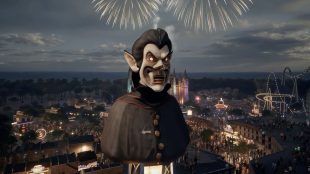
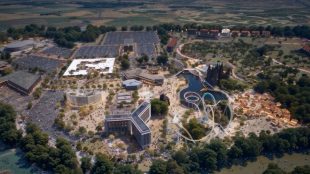
Just days ago, developers unveiled the details of Dracula Land, a massive private entertainment
project that promises to transform the country’s most famous myth into a full-scale destination.
With a projected €1 billion private investment, an opening phase planned for 2027, and a
footprint of nearly 780,000 square meters, this is not merely another regional horror attraction. It
is a bid to turn Dracula into a national entertainment engine.
The question is whether this will finally succeed—or repeat a curse that has haunted Dracula
theme parks for decades.
Not Quite Transylvania (But Close Enough for Marketing)
Despite the branding, Dracula Land will not rise from the medieval heart of Transylvania.
Instead, the park is strategically planned near Bucharest, approximately 15 minutes from Henri
Coandă International Airport. Logistically, the choice is obvious: it prioritizes infrastructure,
access, and tourism scalability over geographical purism.
From a mythic standpoint, however, the location is revealing. “Transylvania” remains the
headline hook, but the project steers clear of protected historical zones like Sighișoara—Vlad
Țepeș’s birthplace and a UNESCO World Heritage Site. That decision is not accidental; it is a
pivot born of history.
The Ghost of the Failed Dracula Park
Romania has been here before: between 2001 and 2005, the government proposed a state-backed
Dracula Park near Sighișoara. The backlash was immediate. UNESCO, Greenpeace, and even
Prince Charles publicly opposed the project, citing environmental destruction and the
“Disneyfication” of a medieval citadel. The project collapsed under the weight of bureaucracy
and global scrutiny.
Dracula Land’s developers appear to have studied that failure. This time, the capital is 100%
private, the location avoids heritage zones, and the positioning is explicitly “contemporary
entertainment” rather than historical reconstruction. Whether this sidesteps controversy or simply
postpones it remains to be seen.
Inside Dracula Land: Gothic Disneyland
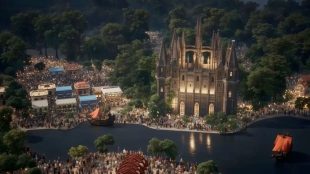
According to the master plan, the park will function as a hybrid of gothic spectacle and familyfriendly immersion across six zones
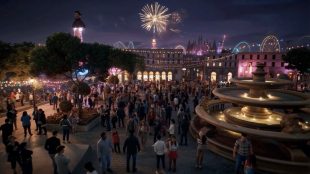
The experience begins in the Moonlit District, a stylized medieval-gothic Bucharest focusing on
nightlife and retail. This transitions into the Family Kingdom (a softer take on the supernatural
for children) and the Transylvania Zone, which leans into the rural folklore aesthetic.
Crucially, the park also looks westward. A London Town zone featuring Victorian architecture
suggests the designers are respecting Stoker’s literary narrative, not just local legend, while the
Port of New Orleans introduces an American gothic flavor. The centerpiece remains Dracula’s
Castle, a massive structure housing the park’s flagship roller coaster.
The involvement of Chris Lange, former creative director at Europa-Park, adds significant
weight to the project. It suggests that Dracula Land understands large-scale experiential design is
about flow and narrative, not just jump scares.
The Tech Gamble: Theme Park or Crypto Ecosystem?
Here is where the project diverges from tradition. Dracula Land isn’t just selling tickets; it’s
selling a “Dracula Metaverse.”
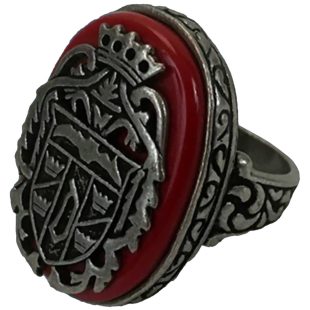
The developers are pitching DraculaCoin for in-park transactions, alongside NFTs tied to digital
experiences and “digital twins” of the park built in Unreal Engine 5. This forces a critical
question: Is this a theme park enhanced by technology, or a speculative digital ecosystem
wearing a gothic costume?
By integrating crypto and metaverse language, the project latches onto contemporary tech trends,
but it also invites skepticism. In the experience economy, the magic must come first; the
monetization method should be invisible.
 Designing “Safe” Horror
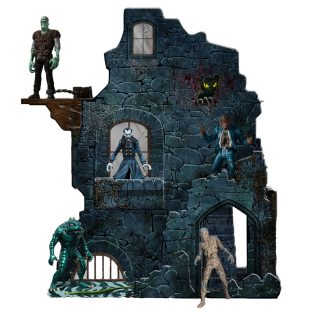
Perhaps the most complex challenge lies not in financing, but in tone. Dracula, as written by
Stoker in 1897, is predatory, invasive, and deeply unsettling. Turning that figure into a mascot
without hollowing him out is a precarious design problem.
How do you reconcile demonic menace with plush toys? Or vampirism with a family carousel?
The inclusion of the Victorian London zone implies a reverence for the source material, but
whether that respect survives the collision with commercial realities is the true test.
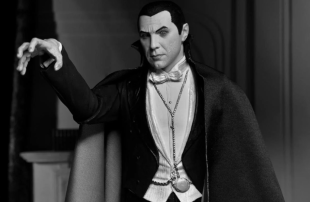
A National IP Finally Claimed: Preserving the Legacy
From a branding perspective, Dracula Land represents something long overdue: Romania
reclaiming its most famous global IP. Hollywood built the myth. Theme parks elsewhere sold the
fantasy. Romania watched. Now, the country wants Dracula back—not just as folklore, but as
infrastructure.
But infrastructure alone is not enough. Authenticity cannot be bought; it must be curated.
Having traversed Transylvania twice—once alongside Dacre Stoker—I have seen firsthand the
delicate balance between myth and reality. Dacre is not merely the great-grandnephew of the
author; he is a formidable researcher and one of the most knowledgeable living authorities on the
relationship between Dracula by Bram Stoker, the 1897 novel, and the Romanian landscape. He
understands that the true power of Dracula lies in the specific narrative DNA of the text, not in
generic gothic aesthetics.If this billion-euro project ignores that DNA, it risks becoming a
soulless tourist trap. To truly succeed, the developers must engage with those who have
dedicated their lives to studying and preserving the vampire myth with rigor. Scholars such as
John Edgar Browning, whose work bridges horror studies and popular culture; Gordon Melton,
the foremost historian of vampire belief systems; and Hans de Roos, whose archival research has
reshaped our understanding of Stoker’s sources, are not optional voices—they are essential
guardians of the myth.
Dracula Land is scheduled to open its first phase in 2027. If it relies solely on technology and
capital, it will fail. But if it respects the source material and consults the leading authorities of the
Dracula narrative—alongside platforms dedicated to preserving it, such as Dracula Legacy—it
could redefine how nations responsibly monetize public-domain myths.
They are building a kingdom for the Count.
They had better make sure it is a home he would actually recognize.
The author used Ai-based tools (ChatGPT) exclusively for language refinement, fact checking
and stylistic clarity. No content, interpretation, analysis, or scholarly argument was generated by
Ai. All intellectual responsibility remains with the author.